

Back pain is one of the most common health problems affecting people of all ages. Whether you spend long hours sitting at a desk, working from home, driving, or lifting heavy objects, back pain can interfere with your daily routine and reduce your quality of life.
While severe or ongoing back pain should always be evaluated by a healthcare professional, many people find that gentle movement, stretching, and improving posture can help reduce everyday muscle tension and stiffness. One natural way to support a healthier back is through yoga.
Practicing yoga for back pain relief combines gentle stretches, strengthening exercises, and mindful breathing to improve flexibility, reduce muscle tightness, and support better posture. In this guide, you’ll learn how yoga may help ease back discomfort and discover simple poses that you can practice at home.
Understanding Back Pain
Back pain can affect different parts of the spine, but lower back pain is the most common. It may develop gradually from poor posture or suddenly after lifting heavy objects or making awkward movements.
Common symptoms include:
- Muscle stiffness
- Lower back discomfort
- Neck and shoulder tension
- Limited flexibility
- Difficulty standing or sitting for long periods
- Pain after physical activity
Maintaining a healthy lifestyle and staying physically active can help support long-term back health.
Common Causes of Back Pain
Several everyday habits contribute to back pain.
Poor Posture
Slouching while sitting or standing places extra pressure on the spine and surrounding muscles.
Sitting for Long Hours
Office workers, students, and drivers often remain seated for extended periods, leading to tight hips and weak back muscles.
If you spend most of your day using a computer or mobile device, you may also benefit from:
Yoga for Digital Detox
Weak Core Muscles
The abdominal and back muscles work together to support the spine. Weak muscles can increase strain on the lower back.
Lack of Physical Activity
Not moving enough can reduce flexibility and increase muscle stiffness.
Stress and Muscle Tension
Emotional stress often causes muscles in the neck, shoulders, and back to tighten.
For stress management techniques, visit:
Yoga for Stress and Anxiety Relief
How Yoga Supports Back Health
Yoga is a gentle form of exercise that encourages healthy movement and body awareness.
Improves Flexibility
Stretching the muscles around the spine helps improve flexibility and reduce stiffness.
Strengthens Supporting Muscles
Many yoga poses strengthen the muscles that support the back, helping improve posture and stability.
Encourages Better Posture
Regular yoga practice increases awareness of body alignment, helping reduce strain on the spine.
Helps Reduce Muscle Tension
Gentle stretching and breathing exercises encourage relaxation throughout the body.
Supports Daily Mobility
Better flexibility and strength can make everyday activities easier and more comfortable.
Best Yoga Poses for Back Pain Relief
These beginner-friendly poses can help improve flexibility and reduce muscle tightness.
1. Cat-Cow Stretch
This gentle movement increases spinal mobility.
How to practice:
- Start on your hands and knees.
- Inhale while arching your back.
- Exhale while rounding your spine.
- Continue slowly.
Benefits:
- Improves spinal flexibility
- Reduces stiffness
- Encourages healthy movement
Practice for 1–2 minutes.
2. Child’s Pose (Balasana)
Child’s Pose gently stretches the back muscles.
How to practice:
- Kneel on the floor.
- Sit back on your heels.
- Stretch your arms forward.
- Rest your forehead on the mat.
Benefits:
- Relieves back tension
- Promotes relaxation
- Supports flexibility
Hold for 1–2 minutes.
3. Cobra Pose (Bhujangasana)
Cobra Pose strengthens the back and improves posture.
How to practice:
- Lie on your stomach.
- Place your hands beneath your shoulders.
- Gently lift your chest.
Benefits:
- Strengthens back muscles
- Opens the chest
- Improves spinal mobility
Hold for 20–30 seconds.
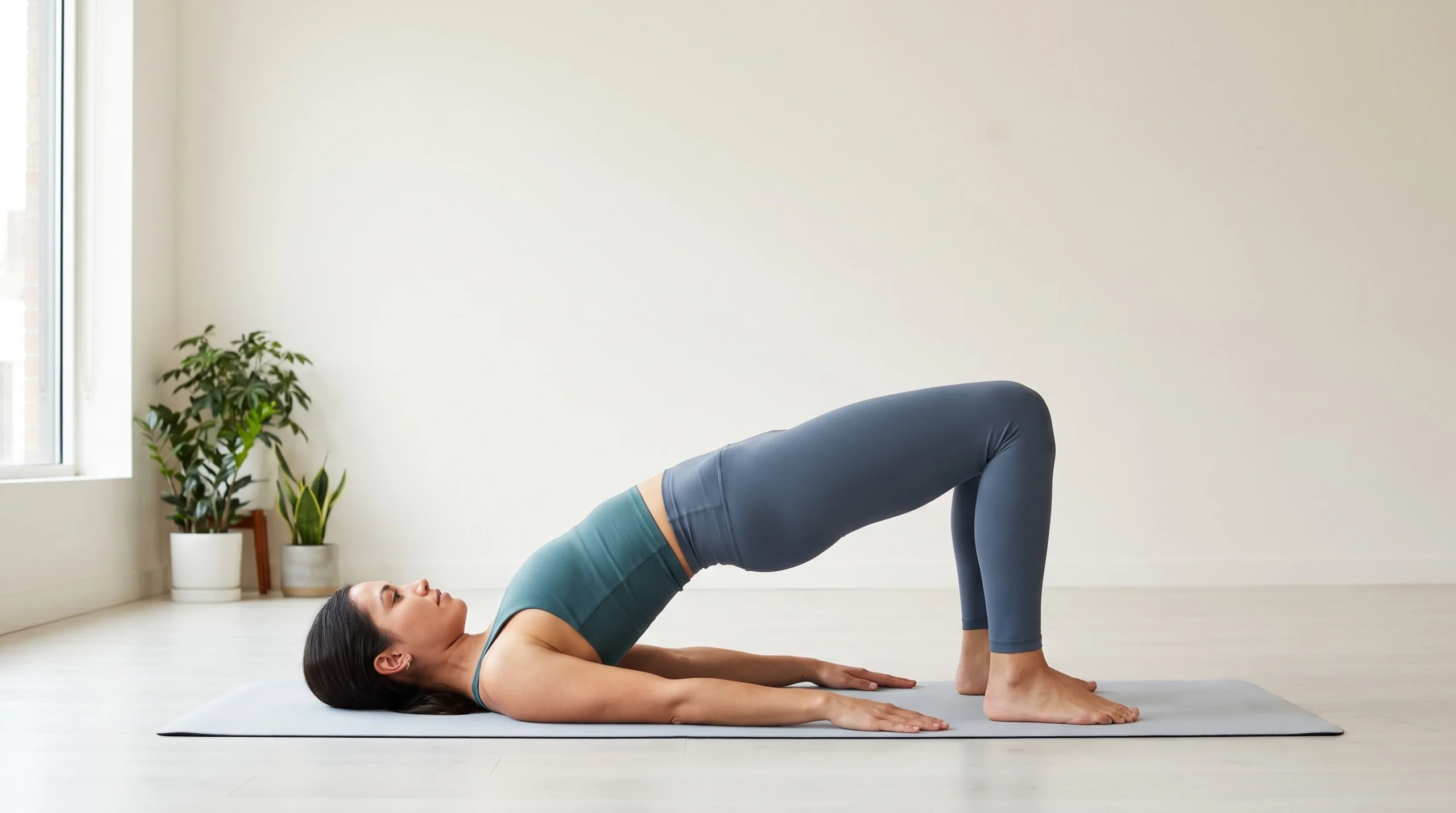
4. Bridge Pose
Bridge Pose helps strengthen the lower back and core.
How to practice:
- Lie on your back.
- Bend your knees.
- Lift your hips toward the ceiling.
Benefits:
- Strengthens core muscles
- Supports the lower back
- Improves stability
Hold for 20–30 seconds.
5. Supine Spinal Twist
This gentle twist helps release tension in the lower back.
How to practice:
- Lie on your back.
- Bend your knees.
- Lower them gently to one side.
- Repeat on the other side.
Benefits:
- Improves flexibility
- Reduces lower back tightness
- Encourages relaxation
Hold for 30 seconds on each side.
6. Downward Facing Dog
This pose stretches the entire back of the body.
How to practice:
- Begin on your hands and knees.
- Lift your hips upward.
- Keep your arms and legs comfortably extended.
Benefits:
- Lengthens the spine
- Stretches hamstrings
- Improves posture
Hold for 30–60 seconds.
A Simple 15-Minute Yoga Routine for Back Pain
Try this beginner-friendly routine:
| Exercise | Duration |
| Cat-Cow Stretch | 2 minutes |
| Child’s Pose | 2 minutes |
| Cobra Pose | 2 minutes |
| Bridge Pose | 3 minutes |
| Supine Spinal Twist | 3 minutes |
| Deep Relaxation | 3 minutes |
Practice this routine three to five times each week for the best results.
Lifestyle Tips for a Healthy Back
Yoga works even better when combined with healthy habits.
Improve Your Sitting Posture
Keep your feet flat on the floor and avoid slouching.
Take Regular Breaks
Stand up and stretch every 30–60 minutes if you work at a desk.
Strengthen Your Core
Core muscles help support the spine during everyday activities.
Stay Active
Walking, stretching, and regular movement support spinal health.
Get Quality Sleep
Rest is essential for muscle recovery and overall health.
If sleep quality is affecting your recovery, read:
Yoga for Better Sleep
Common Mistakes to Avoid
Avoid these common mistakes when practicing yoga:
- Forcing stretches beyond your comfort level
- Holding your breath during poses
- Ignoring pain or discomfort
- Practicing with poor posture
- Skipping warm-up exercises
Yoga should never cause sharp or severe pain.
Who Can Benefit from Yoga for Back Pain?
This routine may be suitable for:
- Office workers
- Students
- Remote workers
- Older adults
- Beginners
- People with mild muscle stiffness
If you have severe or persistent back pain, consult a healthcare professional before starting any exercise program.
Final Thoughts
Back pain can affect your comfort, productivity, and overall quality of life. Fortunately, regular movement and healthy habits can help support a stronger and more flexible back.
Practicing yoga for back pain relief may help improve posture, strengthen supporting muscles, reduce tension, and encourage better mobility. Combined with proper posture, regular movement, and good sleep, yoga can become an important part of maintaining long-term back health.
Begin with gentle poses, practice consistently, and allow your body time to become stronger and more flexible.