

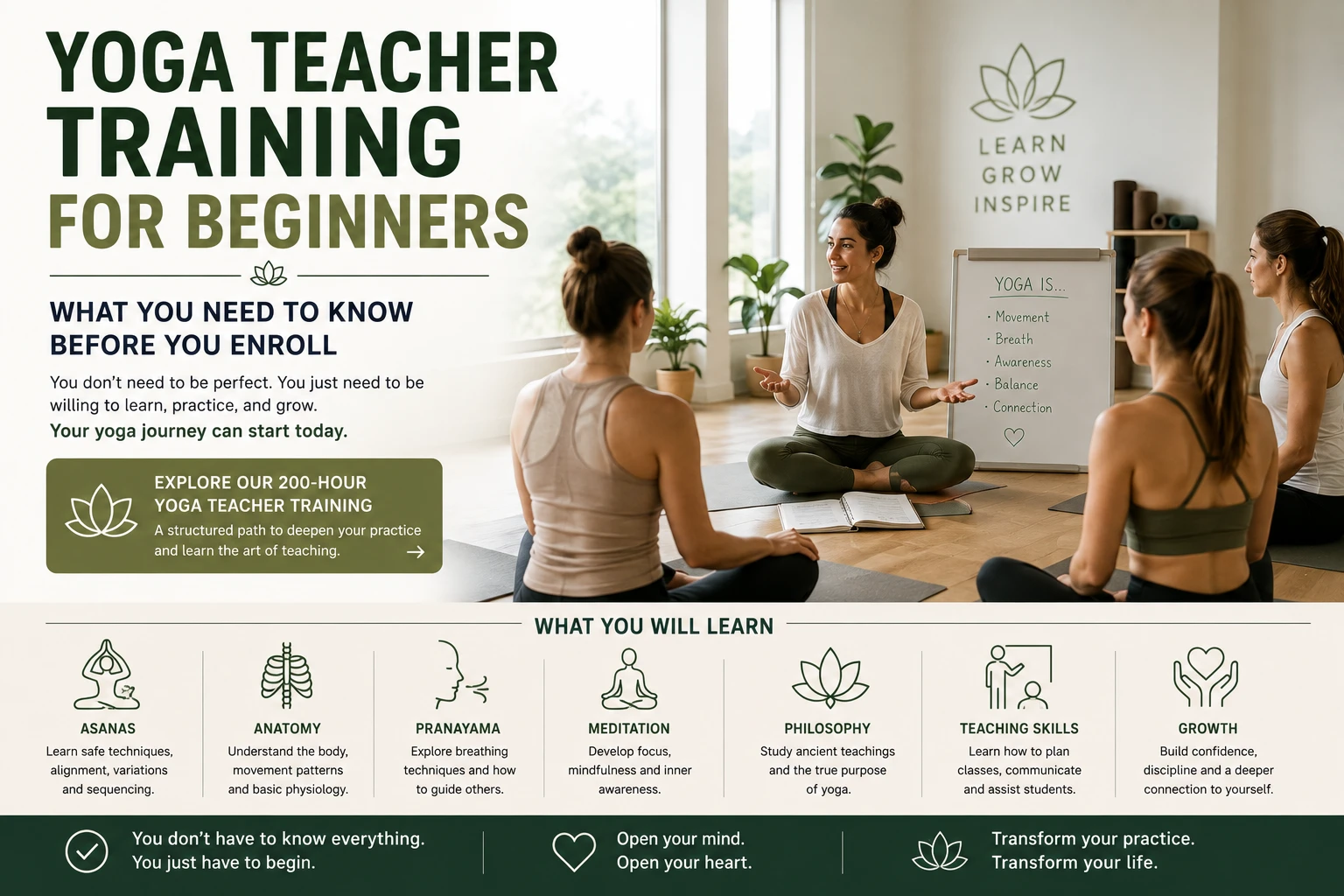
If you love yoga and have started thinking about teaching it to others, you may be wondering whether you are ready for yoga teacher training. Many beginners hesitate because they believe they need years of experience, advanced flexibility, or the ability to perform difficult poses before they can become a yoga teacher.
The reality is that yoga teacher training is designed to help you learn. You do not need to know everything before you begin.
A good training program gives you a structured path to develop your yoga practice, understand traditional yoga teachings, learn about the human body, and build the skills needed to guide other students.
If you are considering yoga teacher training for beginners, this guide will explain what you need to know before enrolling, what you can expect to learn, how to prepare, and how to choose a program that matches your goals.
Can Beginners Do Yoga Teacher Training?
Yes, beginners can explore yoga teacher training, although each school has its own admission requirements and expectations.
You do not have to be the most flexible person in the room. You also do not need to master advanced poses before beginning your education.
What matters more is your willingness to learn, practice consistently, listen to your teachers, and understand that becoming a good yoga instructor is a process.
Some students enter teacher training because they want a career in yoga. Others join because they want to deepen their personal practice and learn more about yoga philosophy, meditation, breathing, and movement.
If you are looking for a structured program, you can explore this 200-hour yoga teacher training to see whether its format and curriculum match your goals.
What Is Yoga Teacher Training?
Yoga teacher training is an educational program that teaches students about different aspects of yoga and prepares them to guide others through yoga practices.
A comprehensive program may include:
- Yoga asanas
- Anatomy and physiology
- Pranayama
- Meditation
- Yoga philosophy
- Teaching methodology
- Alignment
- Sequencing
- Communication
- Ethics
- Practical teaching
The exact curriculum depends on the school and training tradition.
The purpose is not simply to learn a list of yoga poses. Students should develop an understanding of how yoga works, how to communicate instructions, and how to create an appropriate learning environment.
Do You Need Years of Yoga Experience?
Not necessarily.
Experience requirements vary between yoga schools, so you should always check the specific program before enrolling.
For beginners, the most important qualities are often commitment, curiosity, discipline, and a genuine interest in learning.
You may not be able to perform every pose perfectly when you start. That is normal.
Teacher training is an opportunity to improve your understanding and develop your skills over time.
Do You Need to Be Flexible to Become a Yoga Teacher?
One of the biggest misconceptions about yoga is that you need to be extremely flexible.
You do not.
Yoga is not a competition based on how far you can stretch. People have different bodies, movement patterns, physical abilities, and limitations.
A good yoga teacher needs to understand these differences.
Learning about modifications and variations can actually help you become a better teacher because you learn how to make practices more accessible to different students.
What Do Beginners Learn During Yoga Teacher Training?
A well-rounded yoga teacher training program covers much more than physical postures.
Here are some of the areas you may study.
Yoga Asanas
Asanas are the physical postures used in yoga practice.
Students may learn:
- How to perform common poses
- Basic alignment principles
- Modifications
- Safe transitions
- Common mistakes
- Pose variations
- Sequencing
You will also learn that the same pose may need to be adapted for different students.
Anatomy and Physiology
Understanding the body is an important part of becoming a responsible yoga teacher.
Training may introduce you to:
- Bones
- Muscles
- Joints
- The spine
- Movement patterns
- Breathing mechanics
- Basic physical limitations
This knowledge can help you understand why certain movements feel different for different people.
Pranayama
Pranayama refers to traditional yogic breathing practices.
You may learn different breathing techniques and explore how they can be incorporated into a yoga practice.
Understanding breathing also helps future teachers explain techniques clearly and guide students through them.
Meditation
Meditation is another important part of many yoga traditions.
Students may explore concentration, awareness, mindfulness, and different approaches to meditation.
Even if you initially join training to become a yoga instructor, meditation may become an important part of your own daily practice.
Yoga Philosophy
Yoga has a long philosophical and cultural history.
Teacher training may introduce students to traditional teachings and concepts related to:
- Self-awareness
- Discipline
- Compassion
- Mindfulness
- Ethics
- Personal responsibility
- The relationship between body and mind
Learning yoga philosophy can help you understand yoga as a broader practice rather than only a form of exercise.
Teaching Methodology
Practicing yoga yourself and teaching yoga are two different skills.
A teacher needs to communicate clearly and understand how to guide a group.
You may learn how to:
- Give verbal instructions
- Demonstrate poses
- Create sequences
- Structure a class
- Observe students
- Offer modifications
- Manage a classroom
- Build confidence as a teacher
Practical teaching sessions can be especially valuable for beginners because they give you a chance to practice before teaching independently.
What Is a 200-Hour Yoga Teacher Training Program?
A 200-hour program is a common foundational format for yoga teacher education.
The number of hours refers to the overall educational and training commitment, although the exact structure varies by school.
A program may combine:
- Practical yoga sessions
- Lectures
- Anatomy
- Philosophy
- Meditation
- Breathing practices
- Teaching practice
- Self-study
- Assessments
If you are considering an intensive learning experience, the 200-hour Yoga Teacher Training Summer Intensive is one option you can research before deciding which type of training suits your schedule.
What Are the Benefits of Yoga Teacher Training for Beginners?
Teacher training can offer benefits even if you are not immediately planning to teach professionally.
Deeper Knowledge of Yoga
You can move beyond simply following yoga classes and develop a broader understanding of yoga practice and philosophy.
Stronger Personal Practice
Learning about alignment, breathing, sequencing, and movement can make your own practice more intentional.
Improved Confidence
Teaching practice allows you to gradually become more comfortable speaking in front of others and guiding movement.
Better Understanding of the Body
Anatomy education can help you understand how different movements interact with the body.
Personal Growth
The discipline of training can encourage self-awareness, patience, consistency, and reflection.
Career Opportunities
For people who want to teach, training can provide a foundation for developing a career in yoga and wellness.
How Should Beginners Prepare for Yoga Teacher Training?
You do not need to become an expert before your course begins. However, preparation can make the experience easier.
Practice Yoga Consistently
Try to establish a regular practice before training.
Focus on consistency rather than performing advanced poses.
Learn Basic Yoga Terminology
It can be useful to become familiar with common Sanskrit and English names for basic poses.
You can also learn simple concepts related to breathing and meditation.
Improve Your Listening Skills
Teacher training involves a lot of information.
Listen carefully, take notes, ask questions, and avoid worrying about remembering everything immediately.
Prepare for Physical Activity
Training may involve regular yoga practice, so gentle strength and mobility exercises can help prepare your body.
Do not push yourself into difficult poses simply to prepare.
Organize Your Time
If you choose an intensive program, you may spend several hours each day practicing and studying.
Plan your work, family responsibilities, travel, and rest before the program begins.
What Should You Look for in a Yoga Teacher Training Course?
Choosing the right course is an important decision.
Do not choose a program based only on price.
Research the Teachers
Learn about the teachers’ experience, teaching style, qualifications, and background.
Review the Curriculum
Look for a balanced curriculum covering areas such as:
- Asanas
- Anatomy
- Pranayama
- Meditation
- Philosophy
- Teaching methodology
Understand the Schedule
Make sure you understand how many hours you will study and practice each day.
Check the Learning Environment
Consider whether you prefer:
- An intensive course
- A residential program
- A part-time program
- Smaller groups
- In-person learning
Understand the Costs
Check what the tuition includes and whether additional expenses are required for accommodation, meals, books, travel, or other materials.
Is Intensive Yoga Teacher Training Right for Beginners?
An intensive course can provide an immersive learning environment.
Instead of spreading training over many months, an intensive format allows students to focus closely on yoga education for a concentrated period.
This can be useful for people who want to dedicate a specific period to their studies.
However, intensive training can also be demanding. You should consider your physical condition, schedule, learning preferences, and other responsibilities before choosing this format.
If this approach interests you, you can learn more about the 200-hour yoga teacher training summer intensive before making a decision.
What Should You Bring to Yoga Teacher Training?
Your school should provide a specific packing list, but common items may include:
- Comfortable yoga clothes
- Yoga mat
- Water bottle
- Notebook
- Pens
- Comfortable clothing for studying
- Personal toiletries
- Required books or course materials
If you are traveling for training, check accommodation and travel requirements in advance.
Common Mistakes Beginners Should Avoid
Starting teacher training can feel exciting, but avoid putting unnecessary pressure on yourself.
Trying to Master Everything Immediately
Teacher training contains a lot of information. Give yourself time to learn.
Comparing Your Practice With Others
Every student’s body and experience are different.
Focusing Only on Physical Poses
Yoga teacher education involves philosophy, breathing, meditation, anatomy, and teaching skills too.
Ignoring Rest
Intensive training can be physically and mentally demanding. Recovery is part of learning.
Choosing a Program Without Research
Read the curriculum, research the teachers, understand the schedule, and know what is included before enrolling.
What Happens After Yoga Teacher Training?
Completing a teacher training program is only the beginning of your development as a teacher.
After training, you can continue building your skills through:
- Teaching practice
- Workshops
- Continuing education
- Mentorship
- Personal practice
- Specialized yoga courses
- Further study
Confidence usually develops through experience.
The more you teach, observe, learn, and practice, the more comfortable you can become as an instructor.
Frequently Asked Questions
Can a complete beginner become a yoga teacher?
Potentially, yes. Requirements differ between schools, but you do not necessarily need advanced yoga skills. Check the admission requirements of the program you are considering.
Do I need to be flexible to join yoga teacher training?
No. Flexibility is not the main requirement for becoming a good teacher. Understanding movement and knowing how to adapt practices for different bodies is more important.
How long does yoga teacher training take?
The duration depends on the program format. Some courses are completed through intensive study, while others are spread over several weeks or months.
Is 200-hour yoga teacher training enough to start teaching?
A 200-hour program can provide foundational education, but teaching requirements and professional expectations vary by location, school, and organization. Continued learning and practical experience are valuable.
Can I do yoga teacher training while working?
It depends on the schedule. Part-time programs may be easier to combine with work, while intensive programs require a larger time commitment.
What is the best yoga teacher training for beginners?
There is no single best program for everyone. Look for a course with experienced teachers, a comprehensive curriculum, a learning environment that suits you, and a schedule that fits your life.
Final Thoughts
Yoga teacher training for beginners can be an important first step toward deeper yoga education and, for some people, a future career in teaching.
You do not need to be extremely flexible or master advanced poses before beginning. What you need is a willingness to learn, consistent practice, patience, and an open mind.
Before enrolling, research the teachers, curriculum, schedule, learning environment, and total costs. Think carefully about your goals and choose a program that matches your needs.
For students interested in an intensive training experience, you can explore the 200-hour Yoga Teacher Training Summer Intensive and review the program details before making your decision.
The right training can give you more than teaching techniques. It can help you develop a deeper understanding of yoga, strengthen your personal practice, and build a foundation for continued growth.