

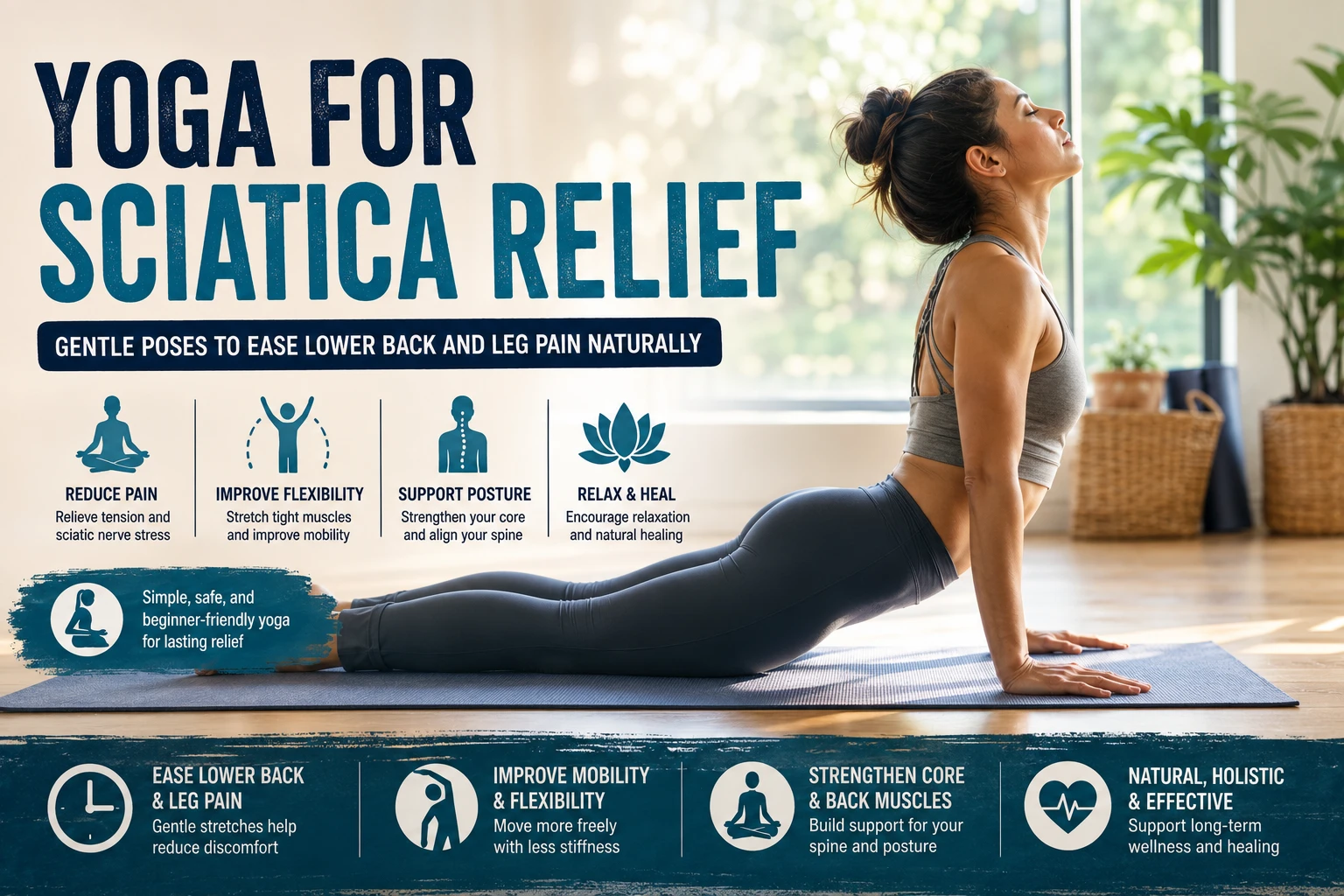
Sciatica can make everyday activities like walking, sitting, standing, or even sleeping uncomfortable. The pain often starts in the lower back and travels through the hips, buttocks, and down one leg. For some people, it feels like a sharp, shooting pain, while others experience numbness, tingling, or muscle weakness.
While yoga is not a cure for sciatica, gentle stretching and strengthening exercises may help reduce muscle tension, improve flexibility, and support better movement. If your pain is severe, follows an injury, or is accompanied by significant weakness or loss of bladder or bowel control, seek medical attention immediately.
In this guide, you’ll learn what sciatica is, how yoga for sciatica relief may help, and simple yoga poses you can practice safely to support your lower back and legs.
What Is Sciatica?
Sciatica refers to pain caused by irritation or compression of the sciatic nerve, which is the longest nerve in the body. It runs from the lower back through the hips and buttocks and down each leg.
Common symptoms include:
- Pain in the lower back
- Pain that travels down one leg
- Tingling or burning sensations
- Numbness in the leg or foot
- Muscle weakness
- Pain that becomes worse after sitting for a long time
Symptoms can vary from mild discomfort to more severe pain.
Common Causes of Sciatica
Several conditions can irritate the sciatic nerve.
Herniated Disc
A slipped or herniated disc is one of the most common causes of sciatica.
Poor Posture
Slouching while sitting or standing can place additional stress on the lower back.
Sitting for Long Hours
Remaining seated for extended periods may tighten the muscles around the hips and lower back.
If your work involves long hours at a desk, you may also find this guide useful:
Yoga for Office Workers
Tight Hip Muscles
Tight muscles around the hips and buttocks can contribute to discomfort around the sciatic nerve.
Lack of Physical Activity
Weak core muscles and reduced flexibility can increase pressure on the lower back.
How Yoga May Help Sciatica Relief
Gentle yoga encourages movement, flexibility, and better posture, all of which may help reduce stress on the lower back and surrounding muscles.
Reduces Muscle Tension
Stretching the hips, lower back, and hamstrings may help relieve tightness that contributes to discomfort.
Improves Flexibility
Flexible muscles allow the body to move more comfortably and reduce stiffness.
Supports Better Posture
Improving posture may reduce unnecessary pressure on the spine and surrounding muscles.
Strengthens the Core
A stronger core helps support the lower back during everyday activities.
Encourages Relaxation
Breathing exercises and mindful movement may help reduce stress, which can increase muscle tension.
Best Yoga Poses for Sciatica Relief
Move slowly and stop any pose that increases pain. Mild stretching is normal, but sharp or worsening pain is not.
1. Child’s Pose (Balasana)
Child’s Pose gently stretches the lower back and hips.
How to practice:
- Kneel on the floor.
- Sit back on your heels.
- Extend your arms forward.
- Rest your forehead on the mat.
Benefits:
- Relaxes the lower back
- Reduces muscle tension
- Encourages relaxation
Hold for 1–2 minutes.
2. Cat-Cow Stretch
This gentle movement improves spinal mobility.
How to practice:
- Begin on your hands and knees.
- Inhale while arching your back.
- Exhale while rounding your spine.
Benefits:
- Increases spinal flexibility
- Relieves stiffness
- Improves mobility
Repeat for 1–2 minutes.
3. Reclining Figure Four Stretch
This gentle variation helps stretch the muscles around the hips.
How to practice:
- Lie on your back with your knees bent.
- Cross one ankle over the opposite thigh.
- Gently draw the supporting leg toward your chest until you feel a comfortable stretch.
Benefits:
- Stretches the hips and glutes
- Reduces muscle tightness
- Improves hip mobility
Hold for 30 seconds on each side.
4. Supine Hamstring Stretch
Tight hamstrings can increase stress on the lower back.
How to practice:
- Lie on your back.
- Raise one leg toward the ceiling.
- Hold behind the thigh or use a yoga strap.
- Keep the stretch gentle.
Benefits:
- Improves flexibility
- Supports healthy movement
- Reduces lower back tension
Hold for 30 seconds on each leg.
5. Cobra Pose (Bhujangasana)
Cobra Pose gently strengthens the back muscles.
How to practice:
- Lie face down.
- Place your hands under your shoulders.
- Slowly lift your chest while keeping your elbows slightly bent.
Benefits:
- Strengthens the back
- Improves posture
- Encourages spinal mobility
Hold for 20–30 seconds.
6. Bridge Pose
Bridge Pose strengthens the hips, core, and lower back.
How to practice:
- Lie on your back with your knees bent.
- Press your feet into the floor.
- Lift your hips slowly.
Benefits:
- Strengthens supporting muscles
- Improves hip stability
- Supports spinal alignment
Hold for 20–30 seconds.
A Gentle 15-Minute Yoga Routine
This beginner-friendly routine can be practiced several times each week.
| Exercise | Duration |
| Child’s Pose | 2 minutes |
| Cat-Cow Stretch | 2 minutes |
| Reclining Figure Four Stretch | 3 minutes |
| Supine Hamstring Stretch | 3 minutes |
| Cobra Pose | 2 minutes |
| Bridge Pose | 3 minutes |
Move slowly, breathe deeply, and never force a stretch.
Healthy Habits That Support Sciatica Recovery
Yoga works best when combined with healthy daily habits.
Avoid Sitting for Long Periods
Stand up and walk every 30 to 60 minutes.
Practice Good Posture
Maintaining proper posture helps reduce unnecessary pressure on the lower back.
To improve your posture, read:
Yoga for Better Posture
Stay Physically Active
Regular walking and gentle movement can help prevent stiffness.
Lift Objects Safely
Bend your knees instead of your back when lifting heavy items.
Sleep in a Comfortable Position
Many people find relief by sleeping on their side with a pillow between their knees.
Sciatica and Lower Back Pain
Sciatica often develops alongside lower back discomfort. Improving flexibility and strengthening the muscles that support the spine may help reduce strain over time.
You may also enjoy:
Yoga for Back Pain Relief
Common Mistakes to Avoid
When practicing yoga for sciatica, avoid these mistakes:
- Forcing painful stretches
- Holding your breath
- Moving too quickly
- Skipping warm-ups
- Continuing if pain becomes sharper or spreads
Gentle, controlled movement is usually more helpful than intense stretching.
Who Can Benefit from Yoga for Sciatica?
This routine may be suitable for:
- Office workers
- People with mild lower back stiffness
- Adults who sit for long hours
- Beginners looking for gentle mobility exercises
- Individuals recovering from muscle tightness (with appropriate medical guidance)
Always consult a healthcare professional before starting a new exercise routine if you have ongoing medical conditions or severe symptoms.
Final Thoughts
Sciatica can interfere with daily life, but gentle movement and healthy habits may help improve comfort and mobility for many people.
Practicing yoga for sciatica relief may reduce muscle tension, improve flexibility, strengthen the muscles that support your spine, and encourage better posture. While results vary from person to person, staying active and practicing consistently can support long-term back health.
Listen to your body, move within a comfortable range, and seek professional medical advice if your symptoms are severe, persistent, or worsening.