

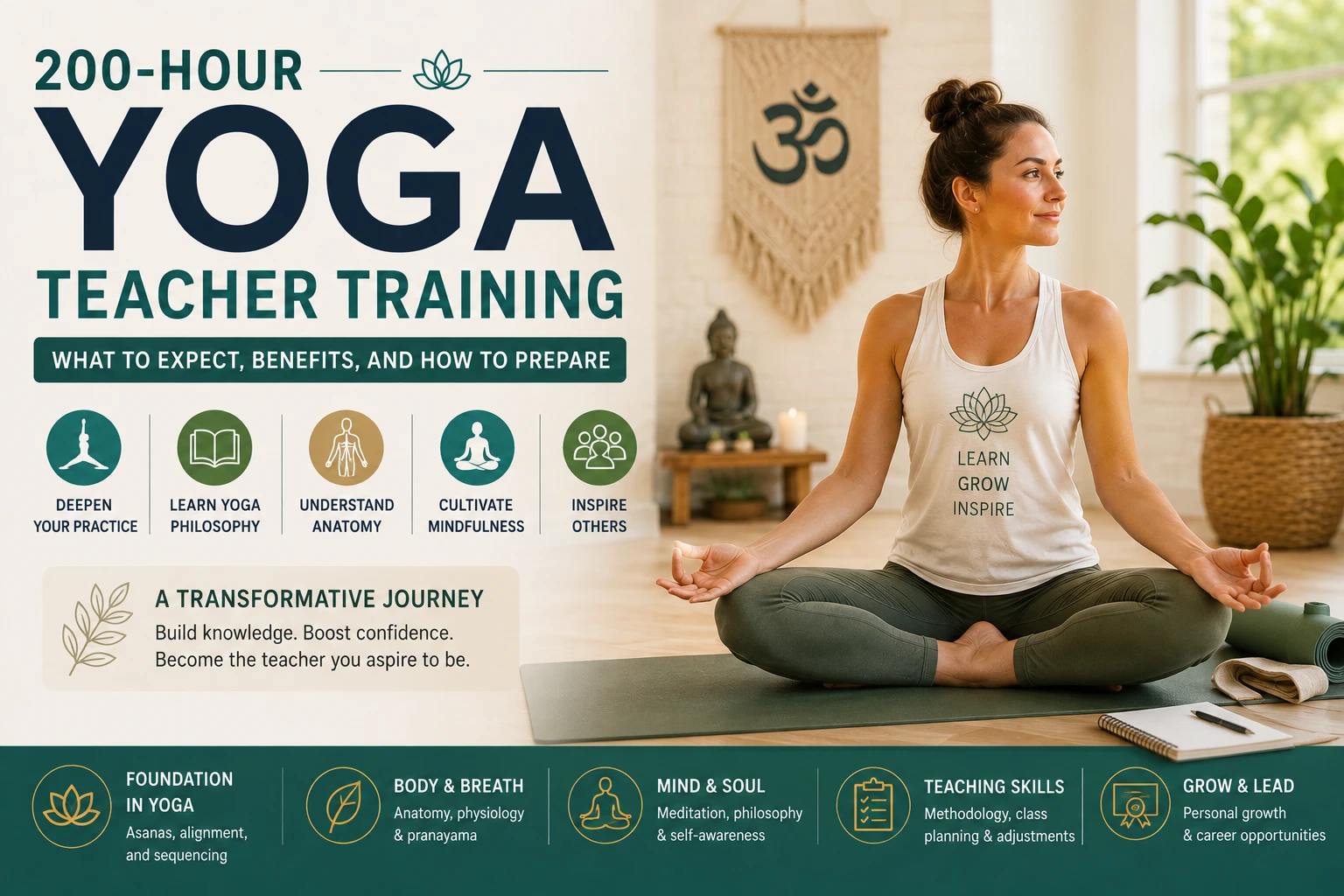
Yoga can be much more than a personal exercise practice. For many people, it becomes a deeper journey of learning, self-awareness, discipline, and personal growth. If you have been practicing yoga for some time and are considering taking the next step, you may have heard about 200-hour yoga teacher training.
A 200-hour training program is one of the most common starting points for people who want to develop a deeper understanding of yoga and potentially teach others. It can introduce you to yoga philosophy, anatomy, meditation, breathing practices, teaching methods, and traditional yoga practices.
However, choosing a teacher training course is a major decision. You need to understand what the training involves, what you can expect as a beginner, how to prepare, and whether the experience matches your personal and professional goals.
In this guide, we will explain what 200-hour yoga teacher training is, what you can learn, the benefits of completing a program, how to prepare, and what to consider when choosing a course.
What Is 200-Hour Yoga Teacher Training?
A 200-hour yoga teacher training is an intensive educational program designed to provide students with a structured foundation in yoga theory and practice.
Although the exact curriculum varies between schools, a comprehensive program may cover areas such as:
- Yoga asanas
- Anatomy and physiology
- Pranayama
- Meditation
- Yoga philosophy
- Teaching methodology
- Alignment and adjustments
- Sequencing
- Ethics
- Personal practice
The goal is not simply to memorize yoga poses. A good program helps students understand why practices are performed, how they affect the body and mind, and how to communicate them clearly to other students.
For people looking for an intensive learning experience, a 200-hour yoga teacher training can provide a structured environment for developing these skills.
Who Is 200-Hour Yoga Teacher Training For?
You do not necessarily need to be an advanced yoga practitioner to consider teacher training.
Many programs are designed for people with different levels of experience. Some students join because they want to become yoga teachers, while others simply want to understand yoga more deeply.
A 200-hour program may be suitable for:
- Beginners who want structured yoga education
- Experienced yoga practitioners
- People interested in teaching yoga
- Wellness professionals
- Fitness instructors
- People interested in yoga philosophy
- Individuals looking for personal development
Your reason for joining matters. You do not have to know exactly what your future career will look like before beginning your training.
What Do You Learn During 200-Hour Yoga Teacher Training?
One of the biggest advantages of a structured yoga teacher training program is the opportunity to study different aspects of yoga together rather than learning individual poses separately.
Yoga Asanas
Asanas are the physical postures commonly associated with yoga.
Training may explore:
- Basic and intermediate poses
- Proper alignment
- Modifications
- Benefits and limitations
- Safe transitions
- Sequencing
- Variations for different students
The purpose is to develop a deeper understanding of movement rather than simply performing poses.
Anatomy and Physiology
Understanding the human body is an important part of yoga education.
Students may learn about:
- Major muscle groups
- Bones and joints
- The spine
- Movement patterns
- Breathing mechanics
- Basic anatomy related to yoga poses
This knowledge can help future teachers understand how different movements affect the body and how to offer appropriate modifications.
Pranayama and Breathing Practices
Pranayama refers to traditional yogic breathing practices.
During training, students may learn different breathing techniques and explore how controlled breathing can be incorporated into yoga practice.
Breathing is also important when teaching because instructors need to explain techniques clearly and help students practice them safely.
Meditation
Meditation is another important part of many traditional yoga programs.
Students may explore different approaches to meditation, concentration, mindfulness, and awareness.
For many people, meditation becomes an important part of their personal practice even if they originally joined teacher training primarily to study physical yoga.
Yoga Philosophy
Yoga has a long philosophical tradition that goes beyond physical exercise.
Depending on the program, students may study concepts from classical yoga texts and traditional teachings.
Topics may include:
- Self-awareness
- Discipline
- Mindfulness
- Ethics
- Compassion
- Personal responsibility
- The relationship between body and mind
Studying philosophy can help students understand the broader purpose and history of yoga.
Teaching Methodology
Learning yoga personally is different from teaching it to another person.
A good teacher training program helps students develop communication and teaching skills.
You may learn how to:
- Demonstrate poses
- Give clear instructions
- Create sequences
- Use appropriate language
- Observe students
- Offer modifications
- Manage a yoga class
- Build confidence as an instructor
Students may also have opportunities to practice teaching before completing the course.
What Can You Expect During a 200-Hour Training?
A 200-hour course requires commitment.
Depending on the format, students may spend several hours each day studying, practicing, attending lectures, participating in discussions, and completing assignments.
An intensive course can involve:
- Daily yoga practice
- Meditation sessions
- Anatomy lessons
- Philosophy classes
- Teaching practice
- Group discussions
- Self-study
- Practical assessments
If you are considering an intensive format, a 200-hour yoga teacher training summer intensive may allow you to focus closely on your studies within a concentrated period.
Benefits of 200-Hour Yoga Teacher Training
Completing teacher training can offer benefits beyond learning how to lead a yoga class.
1. Deeper Understanding of Yoga
Instead of practicing poses without understanding their background, you can explore the physical, philosophical, and traditional aspects of yoga.
2. Improved Personal Practice
Teacher training often encourages students to practice consistently.
With greater knowledge of alignment, breathing, sequencing, and movement, your personal practice may become more intentional.
3. Teaching Skills
If your goal is to become a yoga instructor, structured education gives you an opportunity to develop the knowledge and communication skills needed to guide students.
4. Greater Confidence
Teaching another person can feel intimidating at first. Regular practice during training can help you become more comfortable speaking, demonstrating, and guiding a class.
5. Personal Growth
Teacher training can be challenging both physically and mentally.
The experience may encourage greater discipline, self-awareness, patience, and reflection.
6. Connection With Other Students
Teacher training often brings together people who share an interest in yoga and wellness.
Learning in a group can create opportunities for discussion, collaboration, and lasting connections.
How to Prepare for 200-Hour Yoga Teacher Training
Good preparation can make the experience more manageable.
Build a Consistent Yoga Practice
If you already practice yoga, try to establish a consistent routine before your course begins.
You do not need to master every yoga pose. Focus on developing awareness, consistency, and comfort with basic movements.
Learn the Basics
It can help to familiarize yourself with common yoga terminology before starting.
You might begin learning:
- Basic asana names
- Common breathing techniques
- Basic yoga philosophy
- Fundamental alignment principles
Improve Your Physical Conditioning
Teacher training can involve significant physical activity.
Gentle strength and flexibility work can help prepare your body for regular practice.
However, preparation does not mean pushing yourself into advanced poses.
Prepare Mentally
A teacher training course involves more than physical exercise.
You may need to study, practice teaching, listen carefully, participate in discussions, and reflect on your own experiences.
Being open to learning is often more valuable than trying to appear experienced.
Organize Your Schedule
Intensive training requires time and concentration.
Before beginning, consider:
- Work responsibilities
- Family commitments
- Travel arrangements
- Study time
- Rest
- Daily practice
Planning ahead can help you focus on the course rather than worrying about unfinished responsibilities.
What Should You Bring to Yoga Teacher Training?
The exact requirements depend on the school, but useful items may include:
- Comfortable yoga clothing
- Yoga mat
- Water bottle
- Notebook
- Pens
- Comfortable footwear
- Personal toiletries
- Any required books or course materials
If the training involves travel or residential accommodation, check the school’s recommended packing list before leaving.
How to Choose the Right Yoga Teacher Training Program
Not every training program is the same.
Before enrolling, research the school and understand what is included.
Check the Curriculum
Look for a program that covers more than physical yoga poses.
A well-rounded curriculum should provide opportunities to study areas such as anatomy, philosophy, meditation, pranayama, and teaching methodology.
Research the Teachers
The teachers have a major influence on your learning experience.
Look at their experience, teaching background, qualifications, and approach to yoga education.
Consider the Learning Environment
Think about whether you prefer:
- Residential training
- Intensive training
- Longer part-time programs
- Smaller groups
- In-person education
- A particular yoga tradition
The right environment can make a major difference in your experience.
Understand the Schedule
Read the daily schedule carefully.
An intensive course can require significant physical and mental energy, so make sure you understand the expected commitment before enrolling.
Check What Is Included
Before paying for a program, find out whether tuition includes accommodation, meals, course materials, assessments, or other expenses.
Is 200-Hour Yoga Teacher Training Worth It?
For someone who wants to understand yoga more deeply or explore teaching as a career, a 200-hour program can be a valuable educational experience.
However, it is important to choose a course based on quality rather than simply selecting the first program you find.
Consider your goals, budget, schedule, preferred learning environment, and the curriculum before making a decision.
If you are specifically interested in an intensive learning experience, you can explore a 200-hour yoga teacher training summer intensive and review the details before deciding whether it fits your plans.
What Happens After 200-Hour Yoga Teacher Training?
Completing a teacher training program can be the beginning of your yoga teaching journey rather than the end.
Depending on your goals and the requirements of the organization or location where you plan to teach, you may continue developing your skills through:
- Teaching practice
- Workshops
- Continuing education
- Personal yoga practice
- Specialized training
- Mentorship
- Further study
Teaching yoga is a skill that develops with experience. Completing a course provides foundational knowledge, but becoming a confident teacher takes continued practice.
Can Beginners Join 200-Hour Yoga Teacher Training?
Many people assume they need to be extremely flexible or advanced before joining teacher training. That is not necessarily true.
Yoga is not a competition based on how far you can stretch. A beginner can still develop an understanding of alignment, breathing, philosophy, meditation, and teaching principles.
However, every school has its own admission requirements, so check the specific requirements before enrolling.
If you are looking for a structured introduction, you can learn more about the 200-hour yoga teacher training option and determine whether the course matches your experience and goals.
Common Mistakes to Avoid
Choosing teacher training is a major commitment, so avoid making a decision based only on price or location.
Common mistakes include:
- Choosing a course without researching the curriculum
- Ignoring the teachers’ experience
- Underestimating the daily workload
- Assuming flexibility is the most important requirement
- Failing to check what the tuition includes
- Not considering your long-term goals
- Choosing a program without understanding its teaching approach
Take your time and compare your options before making a commitment.
Final Thoughts
A 200-hour yoga teacher training can be a meaningful step for anyone who wants to deepen their understanding of yoga, develop teaching skills, or explore a future in yoga education.
The experience can involve much more than physical poses. You may study anatomy, breathing, meditation, philosophy, teaching methodology, and the principles behind a consistent yoga practice.
Preparation is important. Build a regular practice, organize your schedule, learn the basics, and approach the training with an open mind.
Most importantly, choose a program that matches your goals, learning style, experience, and expectations.
A well-structured training experience can give you a strong foundation while helping you grow both as a yoga practitioner and as a future teacher.
If an intensive format fits your schedule and goals, discover the 200-hour Yoga Teacher Training Summer Intensive to learn more about the program and what it offers.