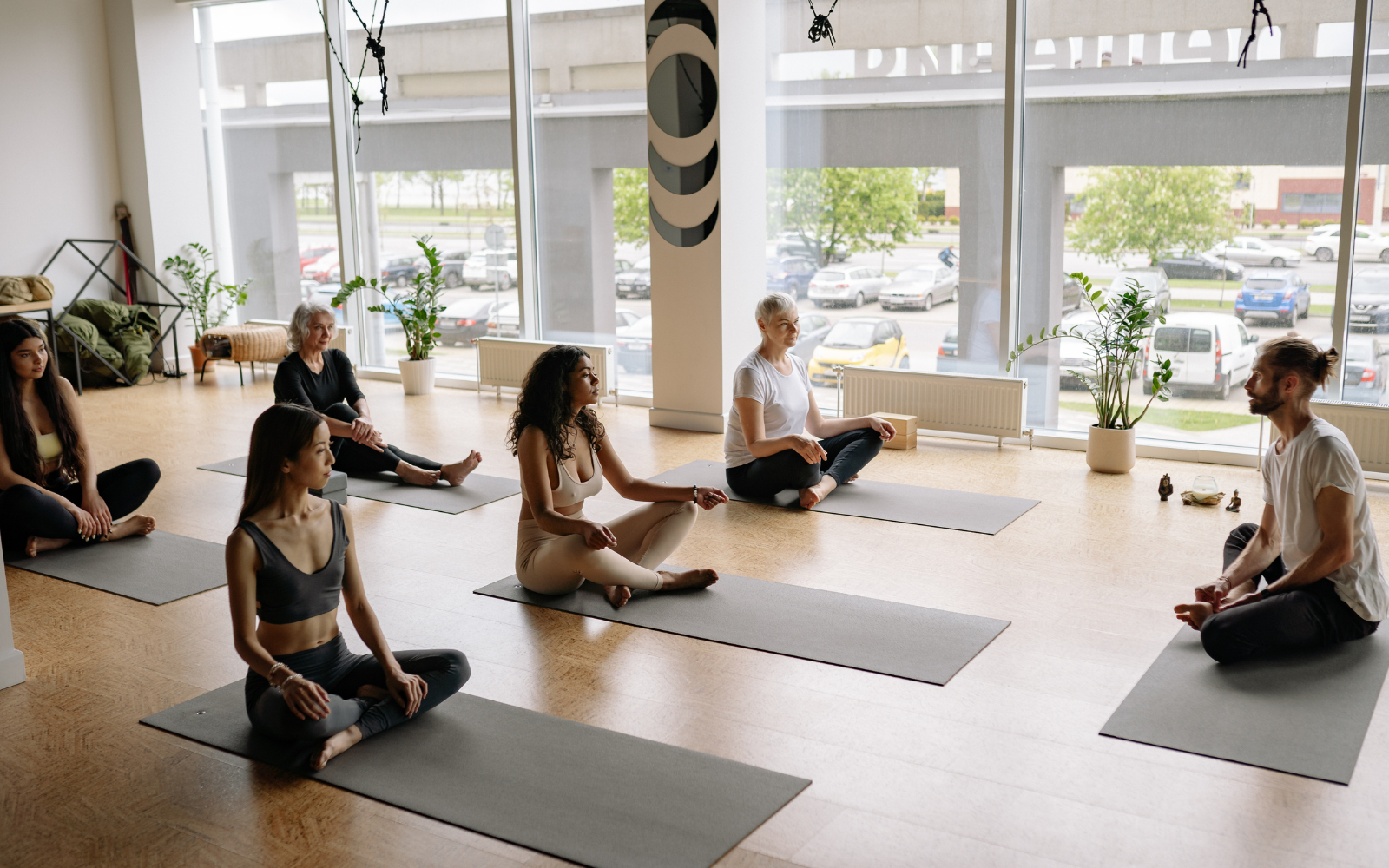
Yoga can begin as a personal practice, but for many students, it eventually becomes something much deeper—a desire to understand the tradition, improve their practice, support others, and potentially build a career around wellness. A 200-hour yoga teacher training program offers a structured way to make that transition.
For students looking for flexibility, a hybrid program combining San Francisco yoga teacher training with online learning can provide the best of both worlds. Participants can develop practical teaching skills through guided instruction while using online resources to study theory, anatomy, philosophy, and other essential subjects at their own pace.
Whether your goal is to become a professional instructor or simply deepen your understanding of yoga, there are several valuable reasons to consider this type of training.
1. Build a Strong Foundation in Yoga
A quality teacher training program goes far beyond learning how to perform individual poses. It introduces students to the broader principles, history, philosophy, and practices that form the foundation of yoga.
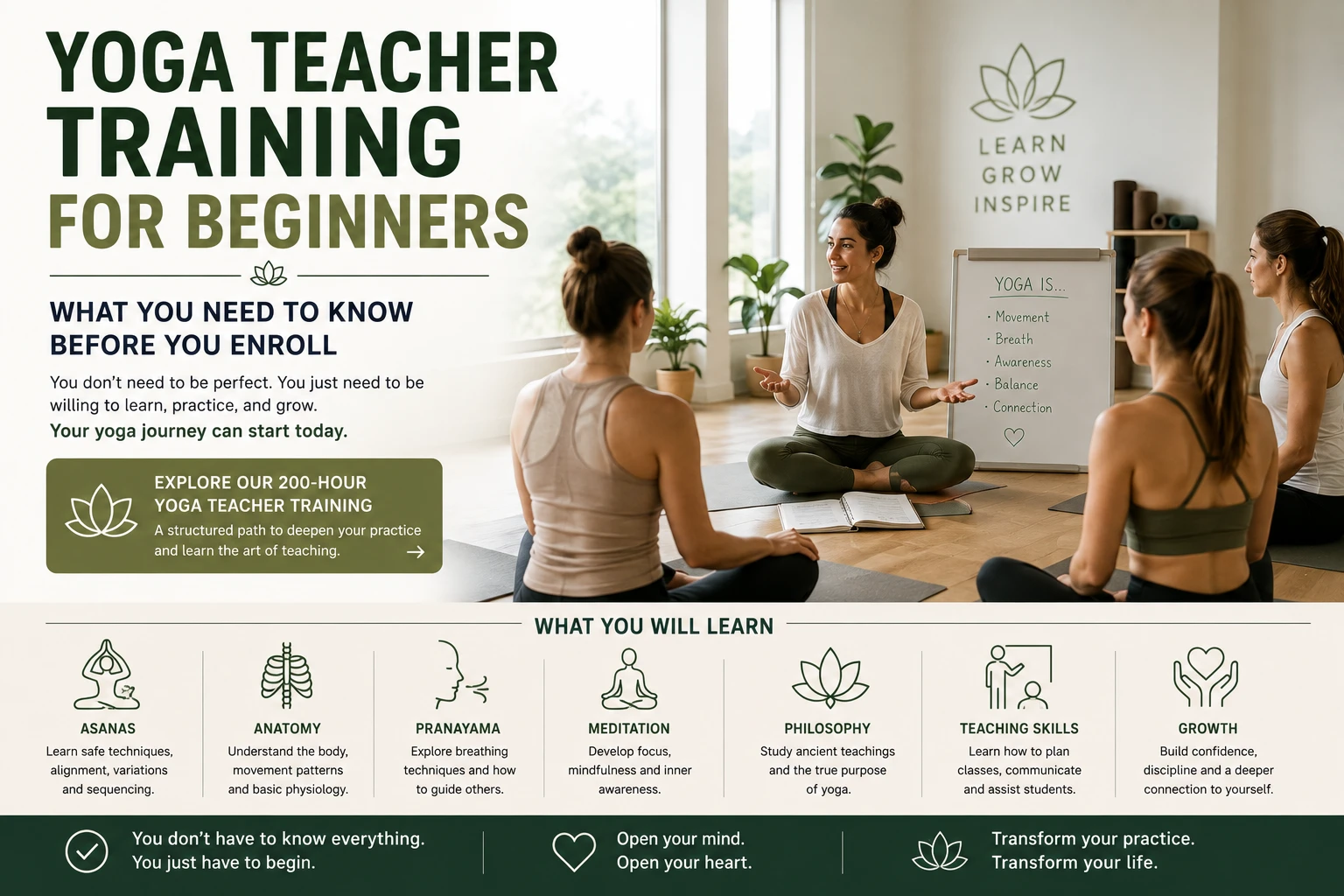
Training may cover subjects such as:
- Yoga philosophy and history
- Asana practice and teaching techniques
- Pranayama and breath awareness
- Meditation and mindfulness
- Anatomy and physiology
- Sequencing
- Sanskrit terminology
- Different yoga styles
- Yoga ethics
- Inclusivity and accessibility
This comprehensive approach helps students understand why particular practices are used rather than simply memorizing a series of movements.
A deeper foundation can also make your personal practice more intentional and meaningful.
2. Develop Confidence as a Yoga Instructor
Knowing yoga personally and teaching it effectively are two different skills.
A yoga teacher training program gives students opportunities to practice explaining postures, demonstrating movements, providing instructions, creating sequences, and guiding groups.
Practice teaching is particularly important because it allows trainees to receive feedback in a supportive environment. Instead of expecting students to become confident immediately, structured training gives them opportunities to gradually develop their communication and leadership abilities.
With repeated practice, you can become more comfortable speaking to a group, offering clear cues, observing students, and adapting instruction to different abilities.
3. Learn How to Create Effective Yoga Classes
An instructor needs more than a collection of poses. A successful class should have structure, purpose, appropriate pacing, and a clear progression.
During a 200-hour yoga teacher training, students can learn how to build classes around themes, movement patterns, energy levels, and specific objectives.
Training can introduce concepts such as:
- Warm-up preparation
- Sun and Moon Salutations
- Standing and balancing postures
- Seated postures
- Backbends and inversions
- Restorative practices
- Breathwork
- Meditation
- Themed sequencing
- Use of yoga props
Learning how these elements work together allows future instructors to create classes that feel cohesive rather than simply moving from one posture to another.
4. Understand Yoga Anatomy and Safe Movement
Anatomy is an important part of responsible yoga instruction.
Students can explore how muscles, joints, movement patterns, breathing, and biomechanics relate to different postures. This knowledge can help instructors provide more thoughtful guidance and recognize when modifications may be appropriate.
For example, a pose may look simple from the outside but require considerable mobility or stability. Understanding movement mechanics can help teachers provide alternatives rather than assuming every student should perform the same version.
A strong understanding of anatomy also encourages teachers to focus on individual needs instead of treating yoga as a one-size-fits-all practice.
5. Experience the Advantages of San Francisco Training
For students who enjoy learning alongside others, yoga teacher training in San Francisco provides an opportunity to study in a collaborative environment.
In-person education can make it easier to participate in partner exercises, group discussions, demonstrations, practice teaching, and hands-on learning. It also allows trainees to develop relationships with classmates who share similar interests.
San Francisco’s diverse wellness community can provide an inspiring environment for students exploring yoga as a personal or professional path.
Face-to-face instruction can be especially valuable during practical components of teacher education, where immediate feedback and interaction can make the learning process more engaging.
6. Enjoy the Flexibility of Online Yoga Teacher Training
Not every student can attend every class in person. Work schedules, family responsibilities, travel, and location can make traditional training difficult.
That’s where online yoga teacher training can offer greater flexibility.
A hybrid approach can allow students to study educational materials and videos remotely while still participating in live or intensive training sessions. Self-paced resources can also give learners additional time to review complex subjects.
Online learning can be particularly useful for revisiting anatomy lessons, yoga philosophy, teaching methodology, and other theoretical material.
Rather than choosing between flexibility and structured education, students can benefit from a combination of both.
7. Deepen Your Personal Yoga Practice
Teacher training isn’t exclusively about preparing to teach other people.
Many students join a certification program because they want to better understand their own practice.
Studying alignment, breathing, meditation, philosophy, and anatomy can change how you approach the mat. You may begin to notice patterns in your movement, understand your breathing more clearly, or approach challenging postures with greater awareness.
The educational process can transform yoga from a routine workout into a more comprehensive practice involving physical, mental, and philosophical elements.
8. Explore Different Yoga Styles and Approaches
Yoga encompasses many traditions and teaching approaches. A comprehensive program can introduce students to different styles and concepts, helping them discover what resonates with their interests.
Training may include exposure to approaches such as:
- Hatha Yoga
- Vinyasa
- Restorative Yoga
- Yin Yoga
- Ashtanga
- Viniyoga
- Meditation
- Pranayama
Learning about different methods can make future teachers more adaptable. Instead of limiting themselves to one approach, they can develop a broader understanding and eventually create an authentic teaching style.
9. Learn the Business Side of Teaching
Turning a passion into a teaching career involves more than knowing how to lead a class.
Aspiring instructors may eventually teach at studios, gyms, wellness centers, private settings, retreats, workplaces, or through online platforms. Understanding the business side of yoga can therefore be extremely useful.
A well-rounded training program may introduce topics such as:
- Goal setting
- Building a teaching practice
- Professional ethics
- Marketing
- Client relationships
- Developing a professional identity
- Creating sustainable teaching opportunities
These lessons can help students think beyond certification and consider how they want to build their future in the wellness industry.
10. Work Toward RYT 200 Certification
One of the major reasons students pursue this level of education is the opportunity to meet the training requirements associated with RYT 200 registration through Yoga Alliance.
A program designed around the 200-hour standard provides structured education across multiple areas of yoga teaching.
For students planning to teach professionally, completing an appropriate training pathway can be an important step toward establishing credibility and demonstrating formal education.
Before enrolling, however, prospective students should always confirm the program’s current certification and registration requirements.
11. Receive Individual Attention and Ongoing Support
Smaller training groups can create a more personalized educational experience.
Instead of feeling like one person in a large classroom, students can have more opportunities to ask questions, receive feedback, and discuss challenges with instructors.
Ongoing support can be equally valuable after formal training ends. New teachers often have questions when they begin creating classes, finding teaching opportunities, or developing their own voice.
Having access to experienced instructors and a supportive learning community can make that transition less intimidating.
12. Find Your Authentic Teaching Voice
One of the most meaningful benefits of teacher education is discovering what kind of instructor you want to become.
A good program doesn’t need to make every graduate teach in exactly the same way. Instead, it can provide the knowledge and tools students need to develop their own approach.
Your teaching style may eventually be influenced by your personality, experience, preferred yoga traditions, and the communities you want to serve.
The goal is not simply to imitate another teacher. It is to develop the knowledge, confidence, and awareness needed to teach authentically.
Is a 200-Hour Program Right for You?
A 200-hour yoga teacher training course can be suitable for a wide range of students. You don’t necessarily need to be an advanced practitioner or capable of performing every challenging posture.
What matters most is a genuine interest in learning, practicing consistently, and understanding yoga more deeply.
If you want professional teaching skills, a flexible learning format, deeper personal development, or an introduction to the business of yoga, a hybrid San Francisco and online program may be worth considering.
Frequently Asked Questions
1. What is a 200-hour yoga teacher training program?
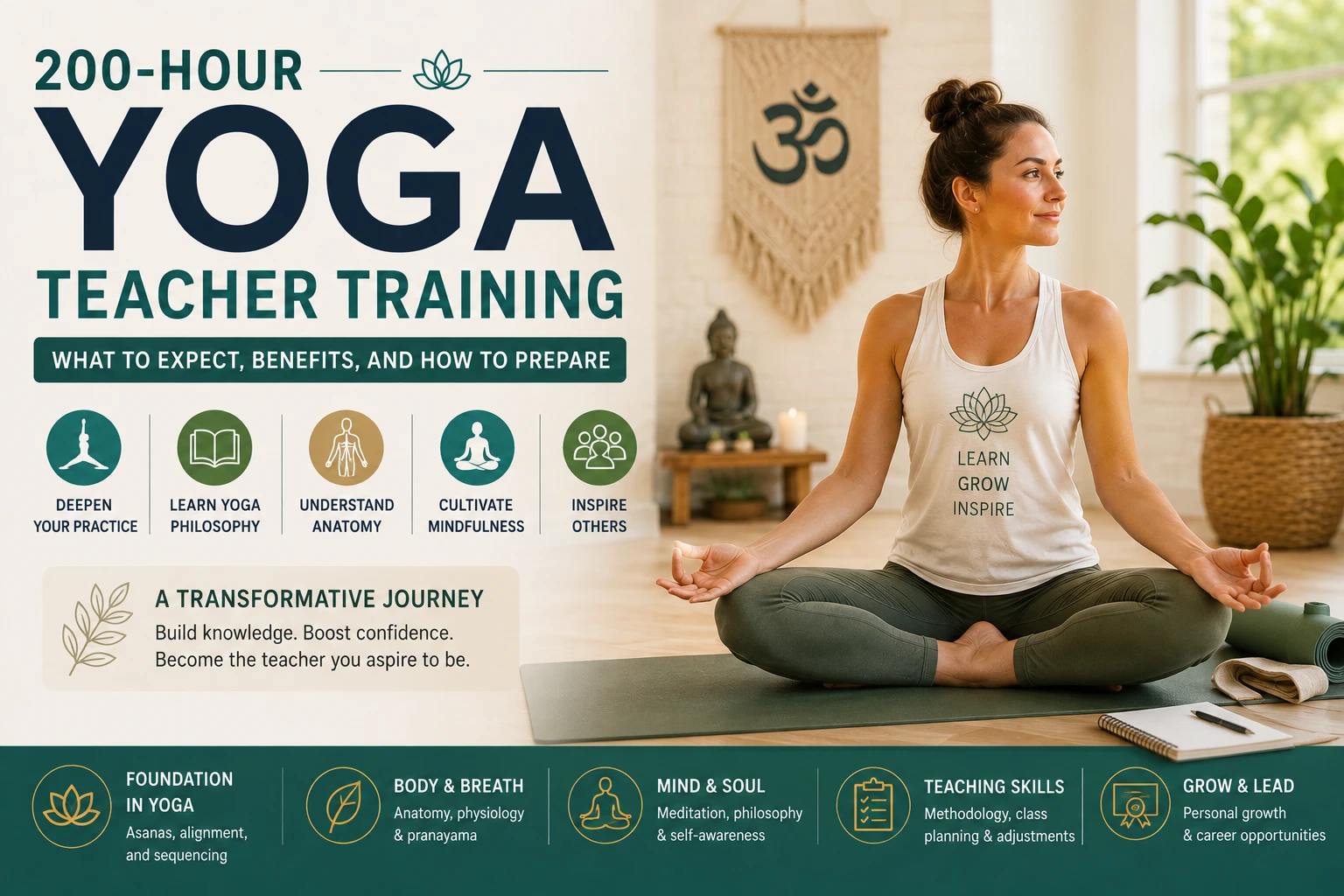
It is a comprehensive training pathway designed to teach the foundational knowledge and practical skills needed to guide yoga classes. Curriculum commonly includes asana, anatomy, philosophy, meditation, pranayama, teaching methodology, sequencing, and ethics.
2. Can beginners join a 200-hour yoga teacher training?
Requirements vary by program. Many courses welcome students who have a sincere interest in yoga, even if they are not advanced practitioners. Prospective students should review the individual program’s prerequisites before applying.
3. What are the benefits of online yoga teacher training?
Online learning can provide flexibility for students managing work, family, travel, or other commitments. Recorded materials and self-paced coursework can also make it easier to review lessons and study theoretical subjects.
4. Can I become a yoga teacher after completing 200 hours?
A qualifying 200-hour program can provide the educational foundation for pursuing RYT 200 registration, subject to the applicable Yoga Alliance requirements and the specific program’s structure.
5. Why choose a hybrid program in San Francisco and online?
A hybrid format combines the interaction and practical experience of in-person education with the convenience of remote study. It can be especially useful for students who want structured classroom learning without giving up flexibility.
Start Your Yoga Teacher Training Journey
Choosing a teacher training program is an important decision because the experience can influence both your personal practice and your future teaching style. Look for comprehensive instruction, experienced educators, practical teaching opportunities, flexible resources, and ongoing support.
For students interested in developing their practice while learning how to teach, Yoga Education Institute offers a 200-hour hybrid program held in San Francisco and online. The program combines practical training, online coursework, yoga philosophy, anatomy, teaching methodology, business education, and individualized support.
If you’re ready to take the next step toward becoming a confident and knowledgeable yoga instructor, explore the program, review the schedule and requirements, and apply for the upcoming training.