

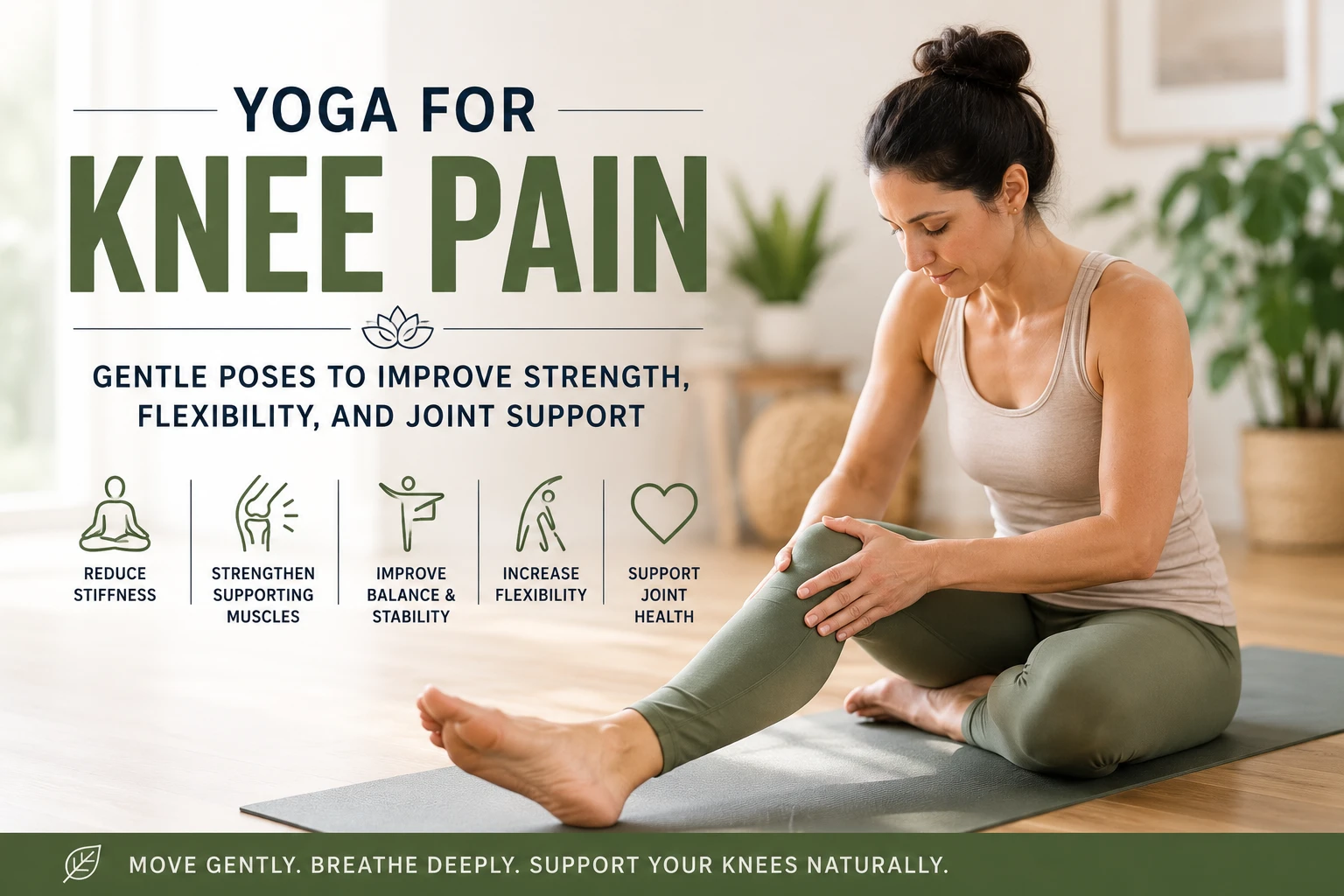
Knee pain can make everyday activities like walking, climbing stairs, exercising, or standing for long periods difficult. It affects people of all ages, from young adults recovering from sports injuries to older adults experiencing age-related joint changes.
While yoga cannot cure every cause of knee pain, gentle and well-performed yoga may help improve flexibility, strengthen the muscles that support the knees, and increase joint mobility. Practicing safely and consistently can also improve balance and reduce stiffness.
If your knee pain is severe, follows a fall or injury, causes significant swelling, or makes it difficult to bear weight, seek medical advice before starting an exercise program.
In this guide, you’ll learn how yoga for knee pain can support joint health, the best beginner-friendly yoga poses, and healthy habits that help protect your knees.
Why Knee Health Is Important
Your knees are among the largest and hardest-working joints in your body. Every step, squat, climb, and jump depends on healthy knee movement.
Strong muscles around the hips, thighs, and calves help reduce stress on the knee joint. When these muscles become weak or tight, the knees often have to work harder, increasing discomfort.
Supporting knee health through gentle movement, strength, and flexibility can make everyday activities easier and more comfortable.
Common Causes of Knee Pain
Many different factors can contribute to knee pain.
Age-Related Joint Changes
As people grow older, the cartilage inside the knee naturally changes, which may contribute to stiffness and discomfort.
Muscle Weakness
Weak thigh, hip, and core muscles provide less support for the knees.
Previous Injuries
Past injuries involving ligaments, tendons, or cartilage may increase the risk of recurring knee discomfort.
Poor Posture
Standing or walking with poor alignment places extra pressure on the knees.
Excess Body Weight
Carrying additional weight increases the load placed on the knee joints during everyday activities.
Overuse
Running, repetitive kneeling, or high-impact activities without adequate recovery can lead to soreness and irritation.
How Yoga Helps Knee Pain
Gentle yoga supports healthy movement without placing excessive stress on the joints.
Strengthens Supporting Muscles
Yoga strengthens the muscles around the hips, thighs, glutes, and core, helping improve knee stability.
Improves Flexibility
Stretching tight muscles reduces stress placed on the knees during movement.
Increases Joint Mobility
Gentle movement helps maintain healthy joint function and flexibility.
Supports Better Balance
Improved balance reduces the risk of falls and uneven pressure on the knees.
Encourages Healthy Posture
Good posture helps distribute body weight more evenly across the legs.
Best Yoga Poses for Knee Pain
Move slowly and avoid any pose that causes sharp or worsening pain. Gentle stretching is beneficial, but pain should never be forced.
1. Mountain Pose (Tadasana)
Mountain Pose teaches proper alignment while strengthening the legs.
How to practice:
- Stand with your feet hip-width apart.
- Keep your knees relaxed, not locked.
- Lengthen your spine.
- Relax your shoulders.
Benefits:
- Improves posture
- Strengthens leg muscles
- Encourages balanced weight distribution
Hold for 30–60 seconds.
2. Modified Chair Pose
A gentle version of Chair Pose strengthens the thighs without placing excessive pressure on the knees.
How to practice:
- Stand with your feet hip-width apart.
- Bend your knees slightly.
- Push your hips back as though sitting into a chair.
- Keep your chest lifted.
Benefits:
- Strengthens thighs
- Supports knee stability
- Improves balance
Hold for 15–30 seconds.
3. Bridge Pose
Bridge Pose strengthens the glutes, hamstrings, and lower back.
How to practice:
- Lie on your back with your knees bent.
- Press your feet into the floor.
- Slowly lift your hips.
Benefits:
- Strengthens supporting muscles
- Improves hip stability
- Supports healthy knee alignment
Hold for 20–30 seconds.
4. Supported Warrior II
Using a shorter stance or holding a chair for support can make this pose more comfortable.
How to practice:
- Stand with your feet wide apart.
- Turn one foot outward.
- Bend the front knee slightly.
- Extend your arms to the sides.
Benefits:
- Strengthens the legs
- Improves balance
- Builds stability
Hold for 20–30 seconds on each side.
5. Reclining Hand-to-Big-Toe Stretch
A yoga strap or towel can make this stretch easier.
How to practice:
- Lie on your back.
- Raise one leg.
- Hold the foot or use a strap.
- Keep the opposite leg relaxed.
Benefits:
- Stretches the hamstrings
- Improves flexibility
- Reduces tension around the knees
Hold for 30 seconds on each side.
6. Legs-Up-the-Wall Pose
This relaxing pose helps reduce fatigue after a long day.
How to practice:
- Sit beside a wall.
- Lie back while placing your legs against the wall.
- Relax your arms by your sides.
Benefits:
- Encourages circulation
- Relieves tired legs
- Promotes relaxation
Hold for 5 minutes.
A Gentle 15-Minute Yoga Routine for Knee Health
Practice this beginner-friendly routine several times each week.
| Exercise | Duration |
| Mountain Pose | 2 minutes |
| Modified Chair Pose | 2 minutes |
| Bridge Pose | 3 minutes |
| Supported Warrior II | 3 minutes |
| Reclining Hand-to-Big-Toe Stretch | 3 minutes |
| Legs-Up-the-Wall Pose | 2 minutes |
Practice slowly and breathe comfortably throughout the routine.
Healthy Habits That Support Strong Knees
Yoga works best when combined with healthy lifestyle habits.
Maintain a Healthy Weight
Reducing excess weight decreases stress placed on the knee joints.
Wear Supportive Footwear
Comfortable, supportive shoes help improve alignment while walking.
Warm Up Before Exercise
Preparing your muscles before physical activity reduces injury risk.
Stay Physically Active
Walking, swimming, and gentle stretching help keep the joints moving.
Strengthen Your Core
Strong core muscles improve balance and reduce unnecessary pressure on the knees.
Knee Pain and Healthy Aging
As we age, maintaining strength and flexibility becomes increasingly important for protecting the knees and remaining active.
You may also enjoy:
Yoga for Healthy Aging
Supporting Your Lower Back
The knees, hips, and lower back work together during everyday movement. Improving lower back strength and flexibility can help support healthy movement patterns.
Learn more here:
Yoga for Back Pain Relief
When Knee Pain Is Linked to Sciatica
Sometimes discomfort around the leg may be related to irritation of the sciatic nerve rather than the knee itself. Understanding the source of pain is important when choosing exercises.
Read more in:
Yoga for Sciatica Relief
Common Mistakes to Avoid
Avoid these common mistakes during yoga practice:
- Locking your knees
- Forcing deep bends
- Ignoring pain
- Skipping warm-ups
- Moving too quickly
- Using poor alignment
Listen to your body and adjust poses when needed.
Who Can Benefit from Yoga for Knee Pain?
This routine may be suitable for:
- Older adults
- Office workers
- Beginners
- People recovering from mild muscle tightness
- Individuals looking to improve flexibility and balance
If you have recently had knee surgery or have significant joint instability, speak with your healthcare provider before beginning yoga.
Final Thoughts
Healthy knees are essential for staying active and independent throughout life. Gentle yoga can help strengthen the muscles that support your knees, improve flexibility, encourage better balance, and reduce stiffness.
Practicing yoga for knee pain consistently, along with maintaining healthy daily habits, may help you move more comfortably and confidently. Start slowly, focus on proper technique, and progress at a pace that feels right for your body.