

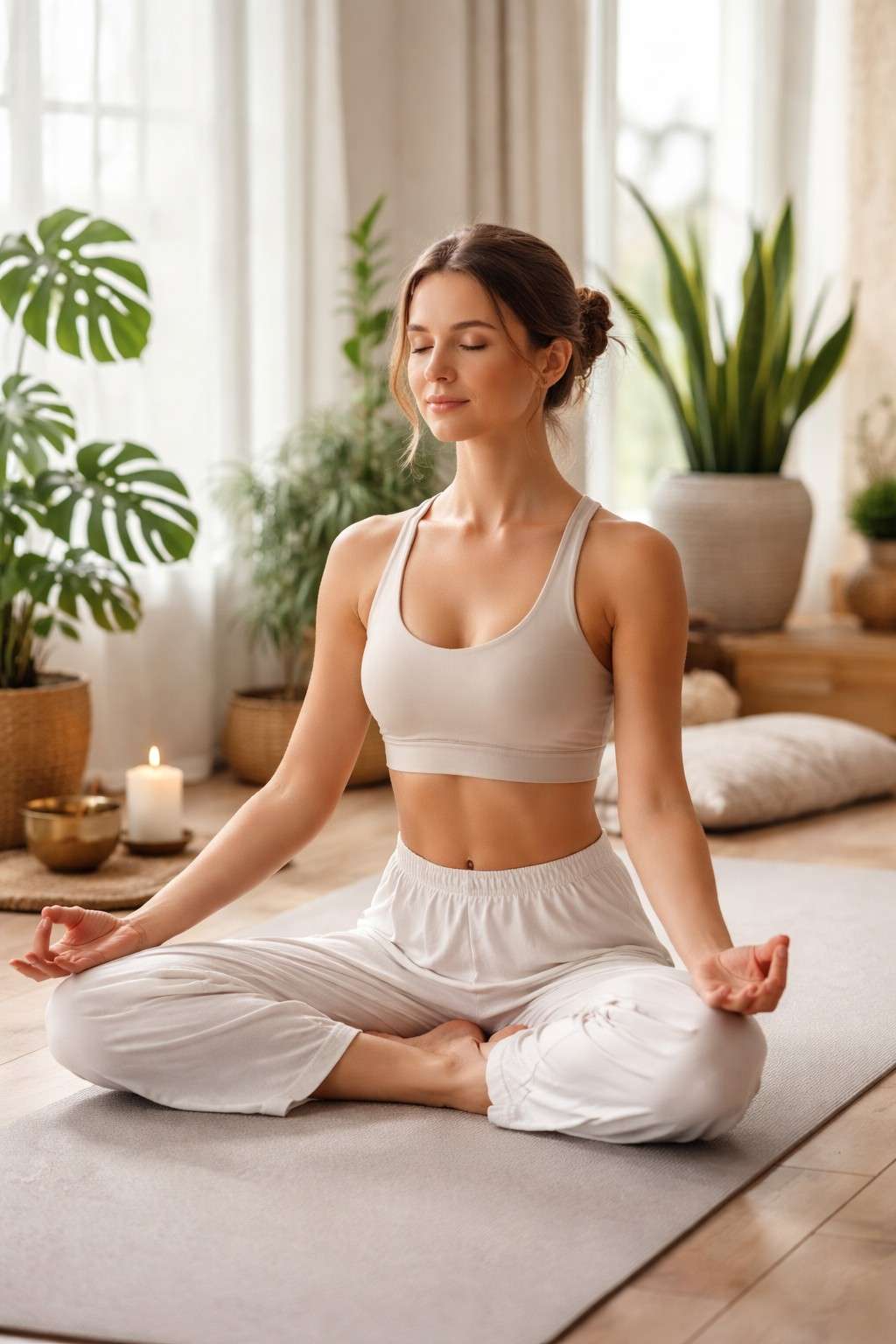
When you look at Yin Yoga and Restorative Yoga, they might seem similar at first because both are slow-paced and rely heavily on props. But as experts like Yoga Education, who teaches Restorative Yoga in a monthly class, often explain, the difference is clear. Yin Yoga is a practice that focuses on longer duration holds, designed to stretch deep tissues and improve flexibility, while Restorative Yoga centers on slowly bringing the body into a deeply relaxed state with the help of props to support and cradle it. Yin Yoga works with a slower pace and aims to stretch and hold postures for up to 3 to 5 minutes, while Restorative Yoga poses are often held for 5 to 20 minutes to encourage relaxation. Both practices are suitable for beginners and anyone interested in slowing down, but they cater to different needs. In my own Yoga education, I’ve come to appreciate how these two styles, although they share some similarities, truly offer unique approaches to relaxation and flexibility. Yin Yoga helps you do less while pushing into deeper stretches, whereas Restorative Yoga is more about finding stillness and comfort. Whether you are seeking to stop, slow down, or simply find out which practice works best for you, these two styles have something to offer for everyone.
What is Yin Yoga?
Yin Yoga is a slow, contemplative style of yoga that focuses on holding postures for longer durations, usually between two to seven minutes, to target the deep connective tissue. The practice emphasizes letting gravity act on the body, which creates an opening and helps with awareness. The core idea behind Yin Yoga is to find an appropriate edge in each posture—one that is sustainable yet challenging. By doing this, you can allow your body to settle into stillness, watching how the tissues of your body adapt and release built-up tension. The practice evolved from Taoist Yoga, which incorporated elements of Taoist philosophy and is rooted in the Yin/Yang philosophy—a balance between opposing forces. While Vinyasa Yoga is considered more yang in nature, Yin Yoga offers a counterbalance, encouraging calm and deep stretches to promote flexibility, joint mobility, and release of trauma through work with energy meridians in the body. The poses help you lengthen the tissues and improve overall physical health by focusing on deep stretches without the need for constant movement or effort.
What types of poses do we do in Yin?
In Yin Yoga, the poses are typically held close to the ground and come in a wide range of forms. These include forward folds, side bends, and hip opening poses like frog or the dragons from the lunge series. You may also encounter supported heart openers and occasionally inversions, though these are done with support from props like blocks or the wall to ensure comfort and proper alignment. The goal of these Yin poses is not only to stretch the body but also to create space in the joints and deep tissues, offering a sense of deep release and relaxation while working through the poses.
How long are Yin poses held?
In Yin Yoga, poses are typically held for longer durations, usually between 3 to 5 minutes. This extended time allows you to use gravity as one of the main tools to help the body relax and stretch the tissues deeply. By holding the posture for this length of time, you can slow down, yield to the pose, and access deeper parts of the body that may not be reachable through quick movements or effort. This approach emphasizes patience and mindfulness, allowing the body to open and release tension over time.
What’s the intention of Yin Yoga?
The intention of Yin Yoga is to offer a contemplative practice where you can truly meet yourself. By holding long holds, you allow the body to abide in stillness and see how the mind and feelings react in different shapes. The goal is to find a sustainable edge—one that is challenging yet compassionate towards the body, without forcing or pushing yourself. Physically, Yin Yoga works to stress the tissues gently, improving hydration in the connective tissues and offering better lubrication for the joints. This not only enhances flexibility but also leaves you feeling deeply relaxed and refreshed. It’s a practice of balance between effort and ease, where the body and mind can release tension and find peace.
Where do props come into Yin practice?
In Yin Yoga, props play an important role in helping you find a sustainable edge during each posture. They provide support for the body, allowing you to give in to the pose without straining or forcing yourself. The use of props helps you feel supported, making it easier to yield into the posture and create the space needed for deep stretches. They are also there to help the posture meet your individual body, ensuring that the practice is comfortable while still allowing you to invite the release of tension and stress in the tissues. With the right use of props, you can make each pose more accessible and effective, allowing for a deeper release and a more fulfilling practice.
Traits of Yin Yoga
Yin Yoga focuses on targeting the connective tissues rather than the muscles, offering a practice that aims to stretch and strengthen the body in a deeper way. Unlike other yoga practices, it works primarily with the connective tissue, including fascia, to improve tissue elasticity and joint mobility. The poses in Yin Yoga are typically held for 2-7 minutes, allowing the body to stimulate the connective tissue over a longer period and release tension. This practice is deeply rooted in Eastern philosophy, especially the Ancient Chinese and Indian cultures, where there is a belief in the system of energies within the body. Yin Yoga incorporates meditation, breathwork, and a physical practice that helps improve flexibility, joint health, and posture. It is especially beneficial for those looking to increase flexibility and improve trauma release, as it focuses on deeper emotional and physical healing. This practice is perfect for those who want to complement a more energetic exercise routine and maintain a healthy, mobile body.
- Targets connective tissues and fascia
- Held poses for 2-7 minutes
- Stimulates deep, less elastic tissue
- Improves flexibility and joint mobility
- Draws from Eastern philosophy, meditation, and breathwork
- Helps release tension, trauma, and stored emotions
Benefits of Yin Yoga
Yin Yoga brings many benefits to the body and mind. It improves joint health by focusing on deeper stretches that target connective tissue and the less elastic tissues in the body. This helps to encourage better joint mobility and flexibility, particularly in areas that are often neglected in regular fitness routines. As a result, Yin Yoga promotes healthy, strong tissues and enhances overall movement. This practice also brings balance to your body and life, drawing from the Taoist philosophy of Yin/Yang, where it helps restore the balance between opposing forces. In a modern world filled with constant stimulation, Yin Yoga can deliver a sense of yin energy, offering relief from stress and anxiety. As you practice, you’ll experience a calmness that can reduce stress and bring peace to the mind, helping you feel deeply relaxed.
- Improves joint health and mobility
- Targets deeper stretches in connective tissue
- Encourages flexibility and healthy tissues
- Brings balance to body and life
- Fosters yin energy to reduce stress and anxiety
- Promotes peace of mind
What is Restorative Yoga?
Restorative Yoga is a calming practice that focuses on providing a passive release for both the mind and body. Using props like blocks, straps, sandbags, bolsters, and blankets, it helps to fully support the body, allowing it to relax and restore. Restorative Yoga evolved from the teachings of B.K.S Iyengar, who explored the healing properties of yoga to address illnesses he experienced in his childhood. The goal of restorative yoga is to bring the body into a state of healing and restoration, specifically through balancing the nervous system, which can shift between two modes: fight or flight and a calming state. In a world where the nervous system is constantly stimulated, this practice helps bring the body into a state of safety, triggering natural healing processes. Unlike active stretches or engagements with the body, restorative yoga encourages deep relaxation with no expectation or agenda. It’s a gentle, slow-paced practice where you wait in stillness and allow quietness to spontaneously arise, offering the opportunity to rest deeply and find peace in the space.
What types of poses do we do in Restorative?
In Restorative Yoga, the poses are typically reclining or seated, focusing on deep relaxation and support. Supported postures like supta baddha konasana (bound angle), viparita karani (legs up the wall), and setu bandhasana (bridge) are common examples you might find in a restorative class. These poses are designed to help the body gently ease into stillness, often using props for extra support to make the practice more comfortable. During a typical yoga class, we might also practice savasana, where you prepare the body and mind for complete stillness. It’s about arranging the body and props to create a space where the energy flows smoothly, inviting a deep experience of rest. These restorative poses are not about effort but about surrendering to the comfort and support that will help you relax fully. In this practice, versions of each pose allow you to receive the most support and feel comfort during the experience.
How long are Restorative poses held?
In Restorative Yoga, the poses are held for a long time, usually longer than in other styles of yoga. Depending on the pose, they can be held for anywhere from 5 to 20 minutes, making it a more common practice for deep relaxation. Savasana, for example, is often practiced for a minimum of 20 minutes to allow the body and mind to truly drop in and relax deeply. The extended length of time in each pose gives you the chance to let go of tension, but it’s important that the practice isn’t rushed or forced. There’s no shortcut—the goal is to fully embrace the stillness and comfort the poses provide without any pressure.
What’s the intention of Restorative Yoga?
The intention of Restorative Yoga is to create a space where the body feels completely comfy and supported, allowing the mind to move on from the usual distractions of thoughts and emotions. Unlike other types of yoga that focus on stretching, restorative yoga is not about stretching at all. Instead, it’s about finding comfort and ease in the body and then allowing that sense of comfort to spread into the subtler parts, like the thoughts and feelings. As you settle into each pose, the goal is to get past the urge to do something, and to simply be. It’s a practice that encourages inner stillness, helping you let go of the stories, giant to-do lists, and any other distractions. By cultivating this stillness, you can create the right conditions for comfort to spill over into your thoughts, making them less important as you stay focused on the quiet present moment.
Where do props come into Restorative practice?
In Restorative Yoga, props are essential to provide the support the body needs to relax and find comfort and ease in each pose. These props help you settle into stillness, allowing you to stay calm and relaxed throughout the practice. The key ingredients for restorative yoga include blankets, bolsters, blocks, straps, and sometimes an eye pillow or cloth to create the perfect environment for relaxation. The goal is to provide the support needed to stay still, while also creating a quiet, dark, and warm setting that helps you drop into a deeply restful state. You don’t need to buy expensive yoga props—you likely have everything you need at home. Even if you’re at a studio, they usually have you covered with the right props to help you find stillness and enjoy the practice with the best chance of relaxation. The key is choosing the right practice space and time, where you can fully enjoy the experience without expecting complete silence, but still able to relax and let go of distractions.
Traits of Restorative Yoga
Restorative Yoga is designed to bring the body into a state of restful healing by using a combination of supportive props and longer holds to help the body relax deeply. These props are used heavily to ensure the body is properly supported and can experience a sense of comfort and calm. The postures are typically held for 5-20 minutes, allowing the body’s healing mechanisms to be triggered and the nervous system to reset from the influence of external stimulation. The use of props helps to create a space where the practitioner feels wrapped up like a cocoon, offering a secure and comfortable environment to fully rest. It’s a practice that focuses on gentle support, allowing the body and mind to settle into a deep state of relaxation and physical comfort.
- Supports the body using props
- Held postures for 5-20 minutes
- Triggers the body’s healing mechanisms
- Creates a sense of comfort and calm
- Promotes restful healing for the nervous system
Restorative yoga is best for:
Restorative Yoga is especially great for those who are looking to heal and find a deep sense of relaxation. It helps with stress release by creating a sense of safety in both the mind and body. This practice is ideal for reaching a state of mindful rest, where you can deeply relax without the need for intense effort. Whether you’re seeking to unwind after a long day or want to explore meditation in a more physical way, Restorative Yoga offers a peaceful and supportive environment to rejuvenate.
- Helps heal and release stress
- Deep relaxation for the mind and body
- Creates a sense of safety in the practice
- Promotes mindful rest and meditation
Benefits of Restorative Yoga
Restorative Yoga is a practice that helps activate the body’s healing mechanisms, bringing it into a state of healing. By focusing on deep calm and relaxation, it promotes the activation of natural healing mechanisms in the body. In a restorative yoga class, it’s quite common to experience falling asleep, which isn’t a surprise considering how soothing the practice is. This creates a total sense of calm and relaxation, allowing practitioners to deeply rest. Not only does it help you feel more relaxed, but restorative yoga also boosts the immune system, helping the body stay healthy and happy. When you are well rested, your immune system functions better, preventing it from suffering due to stress or fatigue.
- Activates the body’s healing mechanisms
- Promotes deep calm and relaxation
- Helps boost the immune system
- Encourages well rested states
- Supports a healthy and happy body
Conclusion:
Both Yin Yoga and Restorative Yoga offer a gentle approach to yoga, making them appropriate for all levels of students, from beginners to experienced practitioners, including athletes, seniors, and those with injuries or movement limitations. While they share some similarities, such as their focus on gentle movement and support, they serve unique formats with separate objectives. Yin Yoga typically involves poses held for 3-5 minutes and focuses on deep stretching to develop the tissues and improve flexibility, whereas Restorative Yoga uses props to provide support and is typically held for 5-20 minutes to allow the body to drop in and relax deeply. Restorative Yoga is about creating a calm and relaxed state, often by cradling the body with props like blankets or bolsters, whereas Yin Yoga encourages more active stretching to engage the tissues. Both styles focus on creating space in the body, but Yin Yoga aims to stretch and release tension, while Restorative Yoga is focused on passive stretching and the deep relaxation of the mind and body.