

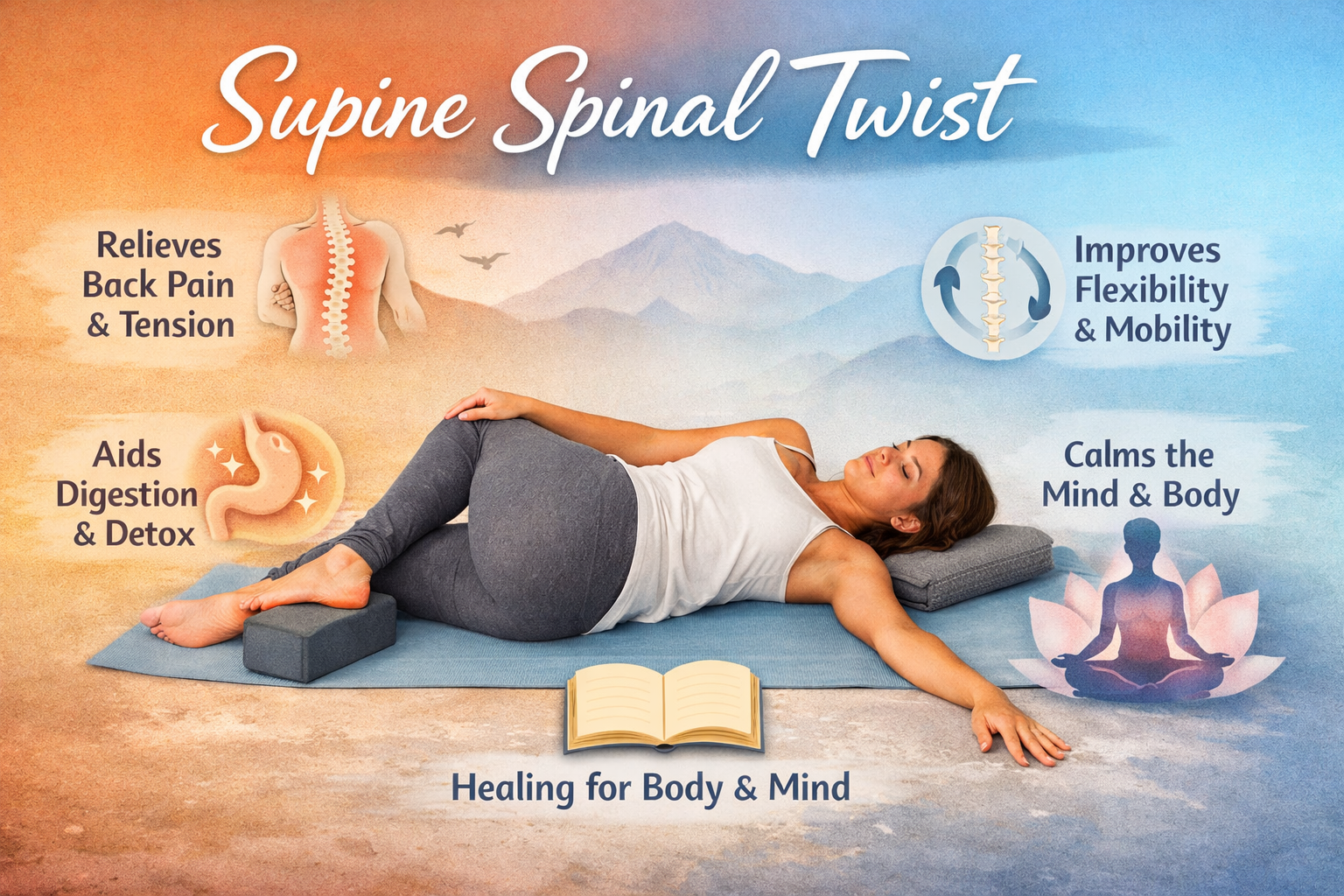
Welcome to a deeper look into the Supine Spinal Twist. This gentle stretch is perfect for anyone experiencing back pain or seeking relief from muscle tension. Often underestimated, twisting poses are essential for spinal health, helping the body rotate correctly. By incorporating this stretch into your daily movements, you can improve spinal mobility, enhance flexibility, and feel a noticeable difference in your back and hips. Experts, like Paul Spano, a physical therapist from the NYU Langone Sports Medicine Department, highlight the importance of spinal rotation in maintaining a healthy spine.
As Paul Spano mentions, many people have a misbelief about twisting, thinking it might not be beneficial or safe. Contrary to this, twisting movements actually support your body by helping the spine move freely, improving circulation and providing relief for back pain. Over time, incorporating spinal stretches like the Supine Spinal Twist can lead to lasting benefits, such as better sleep quality, reduced stress, and increased movement in everyday tasks. As a golfer, Paul Spano includes this practice in his routine to aid rotation and promote better movement for his patients with back-related injuries. The stretch isn’t just about flexibility – it’s about healing and incorporating gentle movements into your daily life.
What is Supine Spinal Twist?
Supine Spinal Twist, also known as Supta Matsyendrasana, is a reclining twist that relaxes the body and soothes the spine. While lying on your back, one leg is crossed over the body, providing a safe and accessible stretch for the hips and lower back. This gentle stretch helps to release stored tension in these areas, offering relief and promoting a sense of relaxation. It’s a pose often included in yoga classes or restorative sequences, as it promotes deep relaxation and gently stimulates digestion and circulation.
Personally, I find that this pose is perfect for winding down after a busy day. The Supine Spinal Twist not only helps to open the chest but also encourages a calm mind, making it an excellent way to prepare for sleep. When practiced consistently, it has a powerful impact on improving mobility and flexibility while helping to ease discomfort in the lower back and hips.
Benefits of Supine Spinal Twist
- Relieves spinal and back tension by gently decompressing and mobilizing the spine.
- Aids in digestion and detoxification by encouraging movement in the abdominal organs.
- Stretches the hips and shoulders, helping to open commonly tight areas from sitting and stress.
- Calms the nervous system and activates the parasympathetic rest and digest response.
- Improves spinal mobility by introducing healthy rotation with minimal strain.
- Supports deep breathing by expanding the ribcage and side body.
- Twisting movements are essential for daily activities like walking and providing back pain relief.
- Offers an opportunity for relaxation and breathing practice, especially after a tough day.
- Ideal for people recovering from surgery, but should be avoided by those with specific health conditions like facet arthropathy or arthritis that exacerbate pain.
Increased spinal mobility
A major benefit of performing spinal twists is the increased flexibility and mobility they offer. By introducing proper spinal movement, you can also improve hip and pelvic mobility. Spano emphasizes that rotational exercises help to dissociate the movement of the trunk from the hips, which can be challenging but ultimately improves control. Without this control, you might feel stiff or experience a blocky movement pattern when walking. By incorporating these movements, you can lead to healthier and better motions, helping with back pain and preventing injuries, such as when bending down to tie shoes or lifting heavy items. A lack of flexibility increases the risk of injury, which is why practicing these twists can help maintain a healthy, mobile body, reducing discomfort.
Pain relief
Stretching with a back twist like the Supine Spinal Twist can significantly reduce pain and improve mobility in areas like the shoulders, thoracic spine, lumbar, and hips. It helps to relieve muscle tension in common pain points such as the low back and glutes. In today’s technology-centered world, where we spend a lot of time sitting at computers, gentle twisting stretches are vital for releasing the built-up tension from sitting or standing for long periods. As someone who experiences occasional back pain, I find that these twisting poses offer relief and help me feel limber and pain-free after long workouts or a full day of walking. Additionally, this stretch targets deep muscles like the quadratus lumborum (QL) and piriformis, offering further support for lower back pain and even nerve compression.
Relaxation
Twisting stretches like the Supine Spinal Twist offer a great opportunity to practice diaphragmatic breathing, which promotes pain relief and deep relaxation. While lying on your back, as you perform the twist, the ribs and thoracic spine gently mobilize, releasing tension and promoting calmness throughout the body. This stretch encourages the mobilizing of tissues, helping the interconnected system of your body feel more relaxed. Spano explains how these stretches not only help with relaxation but also bring peace, especially when combined with deep breaths. Personally, I find that doing this before bedtime helps me unwind and fall asleep quickly, especially after a stressful day. The calming effect of the stretch, along with less tension in the hips, makes it an ideal way to end the day feeling peaceful and rested.
Improved balance
Incorporating standing twists into your practice helps strengthen your muscles while challenging your balance. As you progress to more advanced standing variations, such as twisting lunges, your body adapts by improving coordination and stability. Spano mentions how these movements challenge the postural muscles, especially when you’re in a narrowed stance, making them an excellent way to improve overall balance. Even simple movements like standing twists with arms outstretched help increase balance and core strength. I’ve found that adding these types of twists into my routine not only challenges my balance but also boosts my confidence in holding positions that require focus and stability.
Digestion
Twisting poses like the Supine Spinal Twist can help people manage bloating and constipation by contracting and relaxing the abdominal and core muscles. This gentle motion stimulates the GI system, helping it mobilize and clear any buildup, promoting smoother digestion. Spano explains how spinal mobility and proper motion in the body assist in addressing GI-related issues. Personally, I’ve noticed that after practicing these twisting poses, my body feels lighter and digestion improves. While Leber doesn’t recommend solely relying on spinal twists to alleviate gastrointestinal problems, adding them to a routine can be a helpful way to support the GI system and encourage natural movement, especially for those recovering from surgery or lack of movement.
How to Practice Supine Spinal Twist
- Start lying on your back in Savasana with your legs extended and arms by your sides.
- Hug your right knee into your chest, keeping the left leg extended.
- Use your left hand to guide the right knee across your body, towards the left side.
- Extend your right arm out to the side, palm facing up, and allow your gaze to turn towards it for a comfortable stretch.
- Keep both shoulders grounded on the mat as you maintain the position.
- Adjust the position of your bent knee with a block or blanket if extra comfort is needed.
- Breathe deeply into the side body, holding for a few breaths.
- When ready, return to the center and repeat on the opposite side.
- This variation can be included in your stretching or exercise routine to alleviate and prevent neck, shoulder, low back, or hip pain, leaving you feeling relaxed and grounded by the end of the practice.
Simple spinal twist
Spano recommends that beginners start with a simple version of the stretch that involves legs and is easier to perform. Begin by lying on your back with your feet on the mat and your knees bent. Hug your knees to your chest, and then lower both knees to the right, letting them rest on the floor. Keep your knees and legs stacked on top of each other, ensuring the stretch is gentle for the low back and hips. Extend your arms wide, and look towards your left hand, breathing deeply into the upper shoulders. If the stretch feels intense, you can use props like pillows, yoga blocks, or a folded blanket to support your knees. Once you’re ready, bring your knees back to the center and repeat the steps on the left side. This basic pose is referred to as Jathara Parivartanasana in yoga, and it’s great for easing tension in the spine and providing support for your back.
Alignment Tips:
When practicing the Supine Spinal Twist, it’s important to keep your shoulders grounded to maintain proper alignment. If your knee doesn’t touch the floor, don’t worry—avoid forcing the twist. Let gravity create the movement naturally over time. Keep your extended leg either active or relaxed, depending on your goal for the stretch. If needed, you can use props to support your knee, hip, or shoulder for extra comfort. Always let your breath guide the depth of the twist, rather than forcing the effort, ensuring a gentle and effective stretch.
Simple & Effective Cueing Suggestions
To practice the Supine Spinal Twist, start by allowing your spine to unravel gently with each exhale. Soften into the twist and avoid the urge to force or push the body further. Keep your heart open and ensure your breath is full to help deepen the stretch. Relax your jaw and shoulders, allowing your body to breathe deeply into the side body. Let gravity do the work, trusting that your body knows how to naturally release tension without strain.
Contraindications
If you have a recent back or spinal injury, it’s important to consult a professional before attempting the Supine Spinal Twist. You may need to use props for support to avoid further strain. During pregnancy, especially in the later stages, avoid deep twists and consider modifying the pose with open, side-lying versions for comfort. If you’re dealing with a knee or hip injury, use extra support or simply skip the pose. For those experiencing digestive discomfort like bloating or pain, practice the twist gently. Lastly, if you have osteoporosis, take extra caution with twisting, and avoid any aggressive movement that could lead to injury.
Modifications & Variations of Supine Spinal Twist
For those new to the Supine Spinal Twist or looking for more comfort, modifications can make the pose more accessible. Placing a blanket or **block under the knee helps maintain alignment and prevents strain. To reduce low back tension, bend both knees instead of keeping one extended. If your shoulders are uncomfortable, try placing your arms in a Cactus or T-shape position for more shoulder comfort. For extra support, you can place a wall behind you to rest your knee against, offering more structure. In terms of variations, you can practice the Reclined Twist with both knees bent for a more restorative stretch, or try the Eagle Legs Twist by crossing one leg over the other for a deeper hip engagement. If you’re seeking a more calming experience, consider using a bolster or pillow to support your body, which will also soothe the nervous system. For those wanting to open up the ribs and side body, arms overhead can be used to stretch more actively.
Common Mistakes to Avoid
One common mistake in the Supine Spinal Twist is lifting the shoulder off the ground, which can disturb the alignment of your upper body. It’s important to focus on grounding both shoulders, especially when twisting. Avoid over-twisting the spine; instead, let the twist be passive and supported by your body. Another mistake is holding your breath—remember to breathe deeply and slowly to facilitate the release of tension. Disregarding props is another issue, as using props can support your body, making the pose more sustainable and safe. Lastly, don’t rush into the twist too soon; it’s important to warm up with a gentle sequence before attempting deeper twisting movements to avoid strain.
When to Avoid or Modify Supine Spinal Twist
If you’re in the second or third trimesters of pregnancy, it’s important to modify the Supine Spinal Twist by using open twists or practicing side-lying versions to offer more support. After a recent spinal surgery or with disc issues, you should avoid the twist unless cleared by a healthcare provider. For those with knee or hip pain, it’s best to keep your knees bent and supported with props to reduce discomfort. If you experience fatigue or dizziness, it’s important to make the pose more restorative and avoid deep engagement in the twist. Lastly, if you feel any sharp pain or discomfort, always back off and adjust the twist to keep it feeling spacious and gentle.
Why Practice Supine Spinal Twist?
Supta Matsyendrasana, also known as Supine Spinal Twist, is a gentle and introspective posture that supports release on every level—physical, mental, and emotional. As your body reclines and the spine rotates, it creates space to breathe, feel, and let go of tension. This pose is the perfect way to unwind after a long day or to ground yourself before sleep. Whether practiced in an active flow or as part of a restorative sequence, the Supine Spinal Twist serves as a simple yet powerful reminder that sometimes transformation comes from softening, not striving. Personally, I’ve found it to be a calming way to release the pressures of the day and connect deeply with my body and breath.
Frequently Asked Questions
Should my shoulders stay on the mat during the Supine Spinal Twist?
Ideally, yes, your shoulders should remain grounded to maintain proper alignment. However, if your knee doesn’t touch the floor, it’s not a problem. You can use props like a block or pillow under the knee for support, allowing your body to relax without sacrificing your alignment.
Can I do the Supine Spinal Twist on the bed?
Absolutely. This pose can be calming and restorative, and practicing it in bed is great for winding down after a long day. It’s a perfect way to relax, especially if you’re preparing to sleep.
How long should I hold the twist?
You can hold the twist for 5–10 breaths for a gentle release, or for 1–3 minutes if you’re aiming for a more restorative effect. The key is to listen to your body and focus on gentle breathing.
Is the Supine Spinal Twist good for back pain?
Yes, if practiced gently with proper support, this twist can be a great way to relieve back pain. Just make sure to avoid sharp, deep twisting sensations, as these may strain your back.
Should I modify the pose if I have any pain or discomfort?
If you feel any discomfort, it’s important to back off and adjust the twist. You can use support for your knees or try a gentler version of the pose to avoid deep twisting and reduce the risk of injury.